When the Music Died: How a Golden Boy Jazz Star Rebuilt His Life One Note at a Time
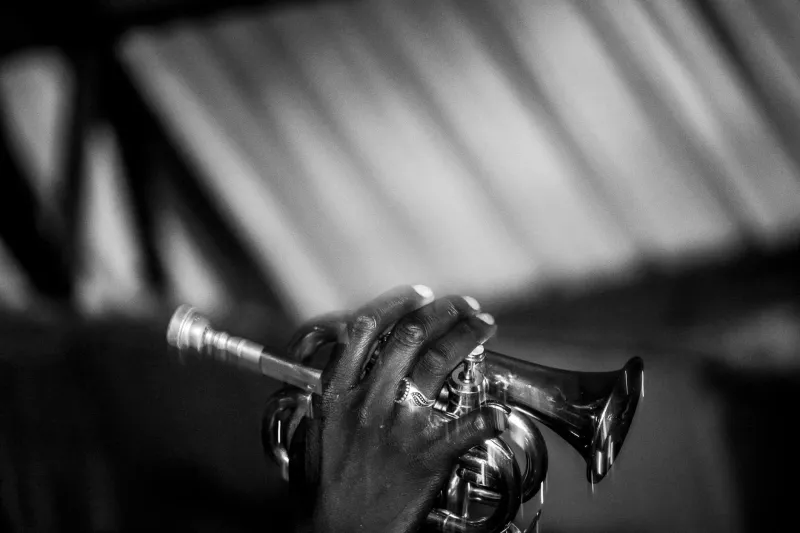
The Boy with the Golden Horn
In 1953, Chet Baker was everything America wanted in a jazz star. Twenty-three years old with James Dean looks and a trumpet tone so pure it could make grown men weep, he'd just recorded "My Funny Valentine" with the Gerry Mulligan Quartet. The song would become his signature, but back then, it was just another session for the kid from Oklahoma who'd stumbled into West Coast cool jazz and made it look effortless.
Baker didn't read music. He'd never studied theory. He just picked up his horn and played what he felt, and somehow that was enough to make him the face of a movement. While bebop masters like Charlie Parker and Dizzy Gillespie were revolutionizing jazz with lightning-fast complexity, Baker took the opposite approach—less notes, more feeling. It shouldn't have worked, but it did.
By the mid-1950s, he was selling out clubs from Los Angeles to New York, recording albums that topped the charts, and starring in a Hollywood film. He had the world in his hands. Then he threw it all away for a needle.
The Long Fall Down
Heroin was everywhere in the jazz scene of the 1950s, and Baker fell hard. What started as occasional use became a daily necessity, and what began as a creative enhancer became the thing that destroyed his creativity entirely. By the early 1960s, his career was in shambles.
The arrests came in waves. Italy in 1960—sixteen months in prison. England in 1962—banned from the country. Germany in 1964—more jail time. Each bust made headlines, each mugshot showed a man aging in fast-forward. The golden boy was becoming a cautionary tale.
But the real bottom came in 1968 in San Francisco. Baker was scoring drugs in the Fillmore district when he was jumped by dealers who thought he was holding out on money. They beat him unconscious and knocked out most of his front teeth.
For a trumpet player, losing your teeth isn't just an injury—it's a death sentence. The embouchure, the precise way a brass player positions their lips and facial muscles, depends on having teeth to anchor against. Without them, Baker couldn't play a single note.
Scrubbing Floors, Chasing Dreams
What happened next wasn't glamorous. There was no montage, no inspirational soundtrack. Just a washed-up jazz star in his late thirties, toothless and broke, taking whatever work he could find to survive.
Baker mopped floors at gas stations. He cleaned bathrooms at restaurants. He washed dishes and swept parking lots, always carrying his trumpet case like some kind of talisman from a previous life. Friends from his glory days would occasionally spot him around San Francisco, but most looked the other way. It was too painful to see what he'd become.
The dentures came first—crude, uncomfortable things that made eating difficult, let alone playing trumpet. But Baker was determined. Every night after his janitorial shifts, he'd lock himself in whatever flop house room he could afford and try to play. At first, nothing came out but air and spit. The dentures shifted in his mouth, creating gaps where there should have been pressure. His embouchure was completely shot.
Most people would have given up. Baker kept trying.
The Science of Starting Over
Rebuilding an embouchure from scratch is like learning to walk again after a spinal injury. Every muscle memory Baker had developed over twenty years of playing was now useless. He had to retrain his facial muscles to work with artificial teeth, find new ways to create pressure and control airflow.
He started with long tones—single notes held for minutes at a time, building strength and stamina. Then scales, played so slowly they barely resembled music. His sound was thin and shaky, nothing like the golden tone that had made him famous. But it was something.
The breakthrough came in 1973, five years after the beating. Baker had been working on his embouchure religiously, and one night, playing alone in his room, he managed to get through "My Funny Valentine" without breaking. It wasn't pretty, but it was recognizable. For the first time in half a decade, Chet Baker sounded like Chet Baker.
The Unlikely Comeback
Word spread slowly through the jazz underground that Baker was playing again. A small club in San Francisco gave him a chance—one night, minimum wage, no guarantees. He showed up in a borrowed suit with his battered trumpet and played a forty-minute set to maybe thirty people.
The reviews were mixed. Some critics said he was a shadow of his former self. Others heard something new in his playing—a vulnerability and hard-won wisdom that hadn't been there in his golden boy days. His tone was different now, raspier and more fragile, but it carried weight.
By the late 1970s, Baker was recording again. Albums like "You Can't Go Home Again" and "Daybreak" showed an artist who'd been through hell and somehow found beauty on the other side. His voice, when he sang, was weathered and broken, but it matched his new sound perfectly.
He toured Europe, where audiences remembered his early work but embraced his evolution. The young, pretty Baker was gone forever, replaced by someone who'd earned every note through suffering and persistence.
What Grit Actually Looks Like
Chet Baker's comeback wasn't a Hollywood ending. He continued to struggle with addiction for the rest of his life, and his career never reached its 1950s heights. But what he accomplished between 1968 and his death in 1988 was perhaps more remarkable than his initial success.
He proved that talent isn't just a gift—it's something that can be rebuilt, note by note, even after it seems completely destroyed. His story isn't about redemption or finding God or any of the other narratives we like to attach to comeback stories. It's about the simple, unglamorous act of showing up every day and doing the work, even when the work feels impossible.
In a culture obsessed with overnight success and natural talent, Baker's second act reminds us that sometimes the most beautiful music comes from the most broken instruments. You just have to keep playing until you find the new song hiding in the wreckage of the old one.