The Dropout Who Rewired America: How a Kid from Rural Appalachia Became the Unlikely Architect of the Modern Internet
The Kid Who Wasn't Supposed to Make It
In 1978, Tommy Ray Hutchins was supposed to be invisible. Growing up in Coalwood, West Virginia — population 900 on a good day — he was the son of a coal miner and a seamstress who'd never seen a computer, much less imagined their boy would one day hold patents that would connect millions of American homes to the internet.
But Tommy had a problem: he couldn't stop asking questions that nobody in his town could answer.
While his classmates planned futures in the mines or the military, Tommy was taking apart every electronic device he could get his hands on. Radios, televisions, his grandfather's hearing aid — nothing was safe. His parents thought he was destructive. His teachers thought he was distracted. What nobody realized was that he was building the foundation for a revolution.
The Internship That Changed Everything
When Tommy dropped out of West Virginia University after two semesters — "too theoretical," he said — his family was devastated. His guidance counselor had warned him: "Boys from Coalwood don't get second chances."
Tommy didn't listen. Instead, he did something that would have been unthinkable for most kids from his background: he drove 400 miles to Bell Labs in New Jersey and talked his way into an internship.
"I showed up with a cardboard box full of things I'd built," Tommy later recalled. "Circuit boards held together with electrical tape, a radio transmitter I'd cobbled together from spare parts. The security guard thought I was there to fix something."
The hiring manager, Dr. Sarah Chen, almost turned him away. Tommy had no degree, no formal training, and a résumé that consisted mainly of odd jobs around Coalwood. But when he started explaining how he'd modified a CB radio to boost its range using salvaged television parts, something clicked.
"He saw connections that our PhD engineers missed," Chen remembered years later. "He wasn't constrained by what he'd been taught was impossible."
The Idea That Got Him Laughed Out of Rooms
By 1985, Tommy had been at Bell Labs for seven years, quietly working on signal transmission projects. While his colleagues focused on improving existing telephone networks, Tommy became obsessed with a different question: how could you send massive amounts of data over the same copper wires that carried voice calls to rural areas?
It seemed impossible. The infrastructure wasn't there. The technology was too expensive. Rural America would never pay for high-speed internet access anyway — this was still the era when most people had never heard of email.
Tommy's solution was elegant in its simplicity: instead of replacing the entire network, why not create a way to dramatically increase the data-carrying capacity of existing lines using frequency manipulation techniques he'd learned while building those CB radio modifications back in Coalwood?
For the next ten years, Tommy pitched his idea to every major telecommunications company in America. The response was always the same: polite interest followed by rejection. "Rural internet is a niche market," they told him. "Not worth the investment."
The Patent That Changed America
While the big companies dismissed his work, Tommy kept refining his approach. Working nights and weekends, he developed a system for what would later be called Digital Subscriber Line (DSL) technology — specifically, a method for dramatically increasing data transmission speeds over existing telephone infrastructure.
In 1994, he filed Patent #5,285,474: "Method and Apparatus for High-Speed Data Transmission Over Existing Telephone Lines." The patent office approved it six months later. Tommy celebrated by driving back to Coalwood and buying his parents their first computer.
Within two years, everything changed. The internet boom was beginning, and suddenly every telecommunications company in America needed exactly what Tommy had been trying to sell them for a decade.
The Revolution Hidden in Plain Sight
By 2000, Tommy's patents were licensing for millions of dollars annually. His technology became the backbone of DSL internet service, connecting millions of American homes — particularly in rural areas that the major companies had written off as unprofitable.
But Tommy's story was largely erased from the official histories. The big telecommunications companies that had rejected his ideas for years now claimed credit for developing broadband technology. Trade publications wrote about the "visionary leadership" of corporate executives who had actually fought against implementing Tommy's innovations.
"History gets written by the people with the biggest marketing budgets," Tommy said in a rare interview in 2003. "But I don't need credit. I just wanted to make sure kids growing up in places like Coalwood could have the same access to information as kids in Silicon Valley."
The Legacy That Lives in Every Connection
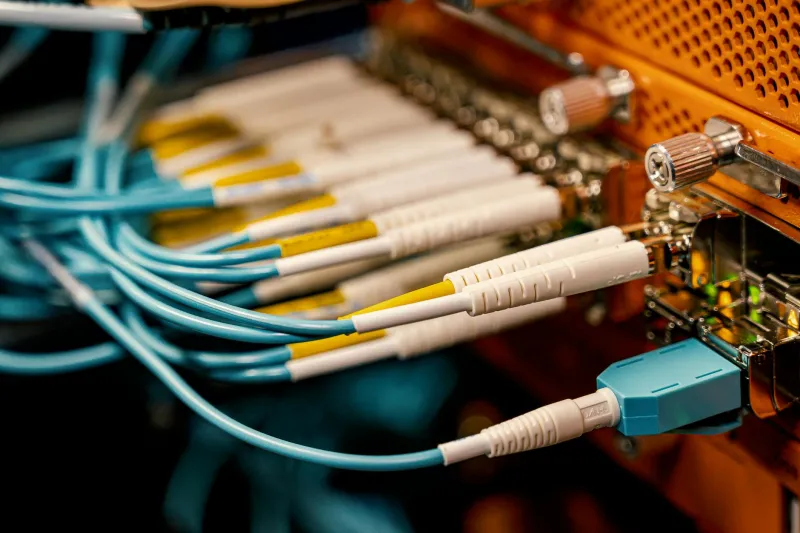
Today, Tommy Ray Hutchins lives quietly in the same West Virginia mountains where he grew up, though his house now has fiber optic internet that would have seemed like science fiction in 1978. His patents have expired, but their impact is everywhere: in the rural broadband networks that connect small towns to the global economy, in the infrastructure that made remote work possible during the pandemic, in the technology that ensures a kid in Coalwood today can access the same online resources as a student at MIT.
The boy who wasn't supposed to make it didn't just make it — he rewired America. He proved that the most important innovations often come not from the centers of power, but from the margins, from people who are naive enough to believe that impossible problems might have simple solutions.
Sometimes the best way to change the world is to be just stubborn enough to keep trying when everyone else has given up.