The Man Nobody Saw
In 1893, while America marveled at the electric lights illuminating the World's Columbian Exposition in Chicago, Thomas Stewart was three hundred miles away in Kalamazoo, Michigan, wrestling with a problem that would have driven most people to simply accept their lot in life. Every night, as the city's business district emptied and darkness settled over the streets, Stewart arrived for his shift with a bucket, a rag, and a growing sense that there had to be a better way.
Stewart wasn't your typical janitor. Born in 1856 to parents who had escaped slavery through the Underground Railroad, he possessed the kind of restless intelligence that refused to be contained by circumstance. While his days were spent in the shadows of office buildings, his mind was constantly working, analyzing, improving.
The mop he dragged through those hallways was essentially unchanged from tools used centuries earlier—a bundle of rags tied to a stick. It was inefficient, unsanitary, and frankly insulting to anyone who took pride in their work. Stewart took pride in his work.
When Necessity Meets Ingenuity
Most people see problems and shrug. Stewart saw problems and stayed up all night sketching solutions by candlelight in his one-room apartment. His neighbors probably thought he was losing his mind, hunched over scraps of paper, muttering about "wringing mechanisms" and "absorbent efficiency."
The breakthrough came on a particularly frustrating Tuesday in 1893. Stewart had been cleaning the same marble lobby for the third time that week, watching dirty water slosh back onto floors he'd just mopped, when something clicked. What if the mop could wring itself? What if you didn't need two hands, a bucket, and the upper body strength of a dock worker just to clean a floor properly?
He rushed home and began building what would become the first self-wringing mop.
The Patent That Changed Everything
Working with salvaged materials and tools borrowed from sympathetic neighbors, Stewart constructed a prototype that was elegant in its simplicity. A series of levers and a wringing mechanism allowed the user to squeeze water from the mop head without removing it from the handle. It was faster, cleaner, and required half the physical effort of traditional mopping.
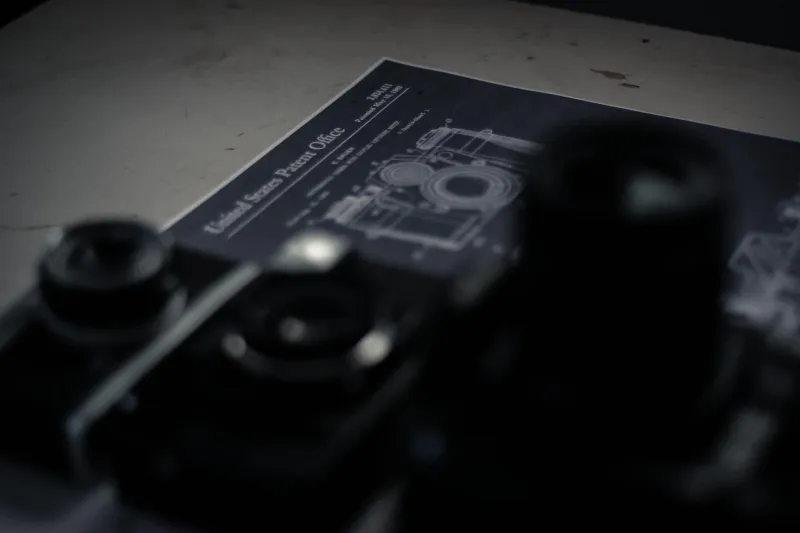
On June 13, 1893, the United States Patent Office issued Patent No. 499,402 to Thomas W. Stewart for his "New and Improved Mop." In the clinical language of patent documentation, it described "a mop having a detachable mop-head, with means for clamping the mop-head to the handle and wringing the mop."
What the patent didn't capture was the years of frustration, the nights without sleep, or the quiet determination of a man who refused to accept that "good enough" was actually good enough.
The Industry That Forgot Its Pioneer
Stewart's invention should have made him wealthy. Instead, it made other people wealthy. The cleaning industry rapidly adopted variations of his design, but Stewart lacked the capital and connections to enforce his patent rights or scale manufacturing. Larger companies simply incorporated his innovations into their products, and Stewart watched his ideas spread across America while his name faded into obscurity.
This wasn't unusual for Black inventors in the late 19th century, but it was particularly galling given how fundamental Stewart's contribution became. Walk into any janitorial supply closet in America today, and you'll find direct descendants of his 1893 design. The self-wringing mop became as essential to commercial cleaning as the broom or the vacuum cleaner.
More Than Just a Mop
Stewart didn't stop with one patent. Over the next decade, he continued innovating, securing additional patents for improvements to mop design and other cleaning implements. Each patent represented another late night, another problem solved, another small victory for a man the world insisted on keeping invisible.
But Stewart's story isn't really about mops. It's about the dangerous assumption that innovation only comes from laboratories and boardrooms. Some of the most transformative ideas in American history have emerged from the minds of people society overlooks—the janitors, the factory workers, the night shift employees who see problems every day that executives never encounter.
The Legacy of Invisible Innovation
Thomas Stewart died in 1931, decades before the civil rights movement would begin to correct the historical record on Black inventors and entrepreneurs. His patents had long since expired, his designs had been absorbed into the industrial mainstream, and his name appeared in no textbooks.
Yet every time someone mops a floor efficiently, they're benefiting from the ingenuity of a man who refused to accept that his circumstances defined his possibilities. Stewart proved that genius doesn't require a college degree, a research budget, or society's permission. Sometimes it just requires the stubborn belief that things can be better, and the willingness to stay up all night making them so.
In an era when we celebrate disruptive innovation and game-changing entrepreneurs, it's worth remembering that some of the most important disruptions came from people who were never invited to the game in the first place. They simply showed up, saw what needed fixing, and got to work.
That's the real legacy of Thomas Stewart—not just a better mop, but proof that extraordinary solutions can emerge from ordinary frustrations, as long as someone cares enough to stay awake and solve them.