The Accidental Criminal
Adolfo Kaminsky never intended to become a forger. In 1943, the 17-year-old French-Argentine was working in a dye shop in Paris, mixing chemicals and learning the delicate art of color matching. His hands were permanently stained from handling fabric dyes, and his greatest ambition was to maybe open his own shop someday.
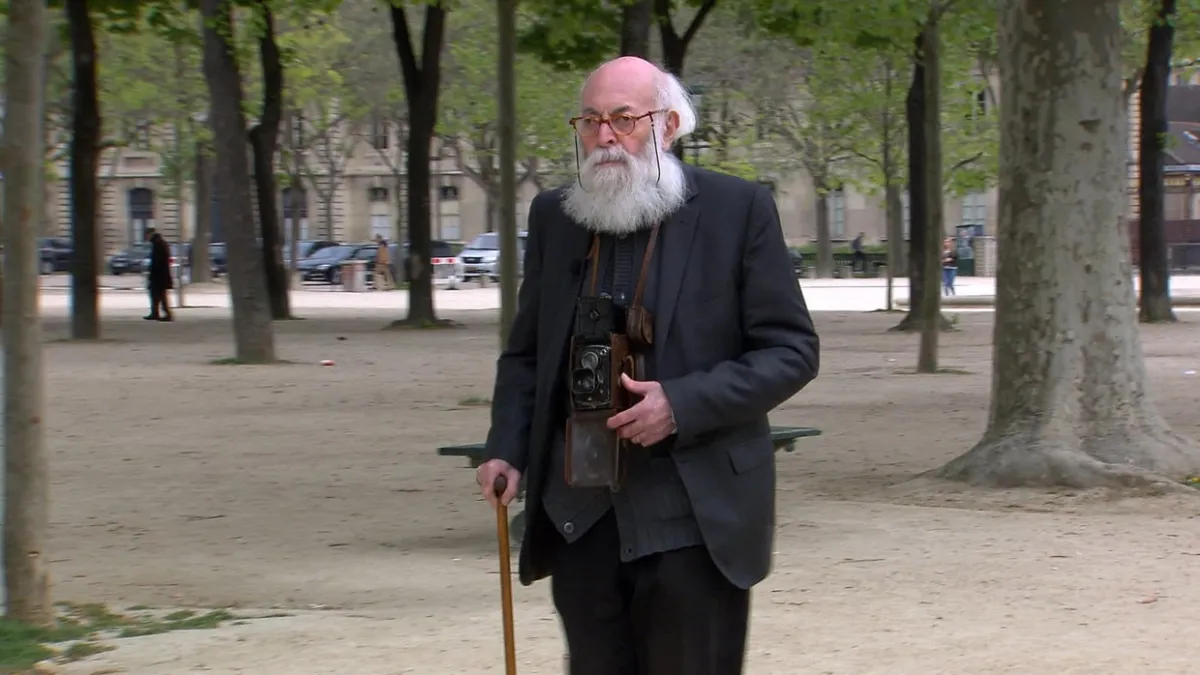 Photo: Adolfo Kaminsky, via assets2.cbsnewsstatic.com
Then the Gestapo came for his family.
As Jewish refugees in Nazi-occupied France, the Kaminskys lived in constant fear of deportation. When the roundups intensified in 1943, young Adolfo made a discovery that would change everything: the same chemical knowledge that helped him dye fabrics could also erase ink from official documents.
It was a skill that would save over 400 lives—and nearly destroy his own.
The Chemistry of Survival
Kaminsky's breakthrough came from understanding something the Nazi bureaucrats didn't: different inks react differently to specific chemicals. While most forgers tried to recreate documents from scratch—a time-consuming process that often produced detectable fakes—Kaminsky realized he could simply modify existing papers.
Using a solution of sodium hypochlorite and potassium permanganate, he could selectively erase certain information while leaving the rest untouched. A Jewish name became French. A deportation order became a work permit. A death sentence became a ticket to freedom.
The technical precision required was extraordinary. Too much chemical and the entire document would dissolve. Too little and traces of the original text would remain visible under examination. Kaminsky had to work by feel, developing an almost supernatural sense for how different papers and inks would react.
But the real genius wasn't in the chemistry—it was in the business model he accidentally created.
The Underground Economy
Word of Kaminsky's abilities spread quickly through the French Resistance. Soon, his small apartment became the hub of an elaborate forgery network that operated like a sophisticated startup, complete with specialized roles, quality control, and rapid scaling.
Kaminsky served as the technical founder, perfecting the chemical processes and training others in his methods. His girlfriend Sarah handled logistics, coordinating pickup and delivery of documents across Paris. A network of volunteers managed distribution, often carrying forged papers in baby carriages or hidden in loaves of bread.
The operation had to move fast. Every day of delay meant more people on trains to Auschwitz. Kaminsky regularly worked 72-hour shifts, sustained only by coffee and the knowledge that each document represented a human life. He developed a personal rule: if he could save one more life by staying awake one more hour, he would never sleep.
The Price of Perfection
The psychological toll was immense. Kaminsky lived with the constant knowledge that a single mistake—a smudged stamp, an inconsistent signature, a chemical reaction gone wrong—could result in not just his own death, but the deaths of entire families depending on his work.
He became obsessed with perfection, studying captured Nazi documents under magnifying glasses to understand every detail of their construction. He learned to replicate not just the visual elements but the physical properties—the weight of the paper, the texture of the stamps, even the specific way different Nazi officials signed their names.
The stress manifested in physical symptoms. His hands developed tremors from the chemical exposure and constant tension. He lost weight rapidly, surviving on minimal food to save money for supplies. Sleep became a luxury he couldn't afford, knowing that every hour spent unconscious was an hour when someone might be loaded onto a deportation train.
Scaling the Impossible
By 1944, Kaminsky's network was producing hundreds of documents per week. They had evolved beyond simple identity papers to create entire false histories: birth certificates, school records, employment documentation, even medical files. Each person received not just a new identity, but a complete backstory that could withstand Nazi interrogation.
The operation required constant innovation. When the Nazis changed their document security features, Kaminsky had to reverse-engineer the new protections within days. When certain chemicals became impossible to obtain, he developed alternative formulas using household products. When safe houses were compromised, the entire network had to reorganize overnight.
What made the operation sustainable was its distributed structure. Rather than centralizing everything in one location, Kaminsky created multiple independent cells that could operate even if others were discovered. It was a business model that wouldn't look out of place in Silicon Valley—except the product was survival itself.
The Liberation Paradox
When Paris was liberated in August 1944, Kaminsky faced an unexpected crisis: success. The Nazi threat was diminishing, but his skills were still desperately needed. Holocaust survivors needed new identities to start fresh lives. Resistance fighters needed clean papers to avoid retribution. The war was ending, but the demand for his services was higher than ever.
Kaminsky made a choice that reveals the true measure of his character: he kept working. For months after liberation, he continued producing documents for displaced persons, refugees, and anyone else who needed a second chance at life. He had built something bigger than a wartime survival tool—he had created a system for human redemption.
The Accountant of Lives
In later interviews, Kaminsky would estimate that his network produced over 10,000 false documents during the war, directly saving at least 400 lives and indirectly protecting thousands more. But he never spoke of his work in terms of heroism or moral superiority.
Instead, he described it as a business problem: how to efficiently produce high-quality products under extreme constraints, with perfect quality control, while scaling rapidly to meet explosive demand. The fact that the product happened to be human survival was almost incidental to the technical and organizational challenges involved.
The Entrepreneur's Dilemma
Kaminsky's story illuminates something profound about entrepreneurship under pressure. When the stakes are literally life and death, the usual business concerns—profit margins, market competition, regulatory compliance—become irrelevant. What matters is pure execution: can you deliver what people need, when they need it, at the quality they require?
His underground document business succeeded because it solved a real problem with technical excellence, operational efficiency, and unwavering commitment to customer satisfaction. That the customers were Holocaust victims and the payment was measured in lives saved rather than francs earned doesn't change the fundamental business principles at work.
Today, when entrepreneurs talk about "changing the world" and "making a difference," Kaminsky's story provides a sobering benchmark. He really did change the world, one forged document at a time, proving that sometimes the most important businesses are the ones that operate in the shadows, where success is measured not in profits but in people who get to see another sunrise.