The Boy Who Learned to Read Faces Before Words
In 1934, deep in the Mississippi Delta, a Black sharecropper's son was born into a world designed to keep him invisible. The cotton fields stretched endlessly under a brutal sun, and the boy's future seemed as predetermined as the crop rotation: bend your back, keep your head down, and don't ask questions.
 Image from img.ntd.com
But this kid had a problem. He couldn't stop watching people.
While other children picked cotton or played in the dirt roads between shacks, he studied the subtle language of survival that every Black child in the Jim Crow South had to master. Which white overseer's mood could turn dangerous with the wrong glance? Which neighbor might inform on a family for having "ideas above their station"? When did silence mean safety, and when did it mean complicity?
By age ten, he could read a room better than most adults could read a newspaper. He just didn't know yet that this skill would one day make him invaluable to American intelligence.
The Long Road North
The boy's name was James Gabriel, though that detail would later become classified along with most of his life's work. What isn't classified is this: he was brilliant, ambitious, and trapped in a system that had no use for brilliant, ambitious Black men.
After high school—a luxury his parents sacrificed everything to provide—Gabriel headed north to Detroit. The year was 1952, and the auto plants were hiring. For a Mississippi farm boy, the assembly line at Ford felt like stepping into the future.
But Gabriel had bigger plans. He enrolled in night school, studying international relations while his hands assembled car parts by day. His professors were skeptical. A Black factory worker from Mississippi wanting to study geopolitics? The guidance counselor suggested he consider "more practical" subjects.
Gabriel ignored them all. He'd spent his childhood learning to navigate impossible situations. A few condescending professors weren't going to stop him now.
The Recruiter Who Saw Something Different
In 1957, a CIA recruiter visited Gabriel's university. The Agency was quietly looking for "non-traditional candidates"—people who could blend into environments where Ivy League graduates stuck out like sore thumbs.
Most recruiters would have overlooked Gabriel entirely. This one was different. Maybe it was Gabriel's perfect recall of obscure geopolitical details, or his uncanny ability to predict how people would react under pressure. Maybe it was something simpler: the way Gabriel carried himself, confident but not cocky, alert but not anxious.
The recruiter made an offer that seemed impossible. The CIA wanted Gabriel to join their ranks as an intelligence officer.
Gabriel's friends thought he was crazy to leave his steady factory job for something so uncertain. His family worried he was reaching too high, setting himself up for a devastating fall.
They didn't understand what the recruiter had seen: that Gabriel's "outsider" background wasn't a liability. It was his greatest asset.
The Cold War's Invisible Warrior
What happened next remains largely classified, but the broad strokes are remarkable. Gabriel spent the next three decades running operations across Africa, Southeast Asia, and Latin America—regions where his ability to connect with people from all walks of life proved invaluable.
While his Ivy League colleagues struggled to build trust with local contacts, Gabriel seemed to speak a universal language of respect and authenticity. A village chief in Ghana, a dock worker in Saigon, a student revolutionary in Chile—somehow, they all trusted him.
His secret wasn't sophisticated training or cutting-edge technology. It was something much simpler: he remembered what it felt like to be underestimated, dismissed, and written off. When he met other people in similar situations, they recognized a kindred spirit.
Reading the Room on a Global Stage
Gabriel's most celebrated operation—details still classified—involved preventing what could have been a catastrophic escalation during the 1962 Cuban Missile Crisis. While diplomats and generals postured publicly, Gabriel worked behind the scenes, using his network of contacts to facilitate crucial back-channel communications.
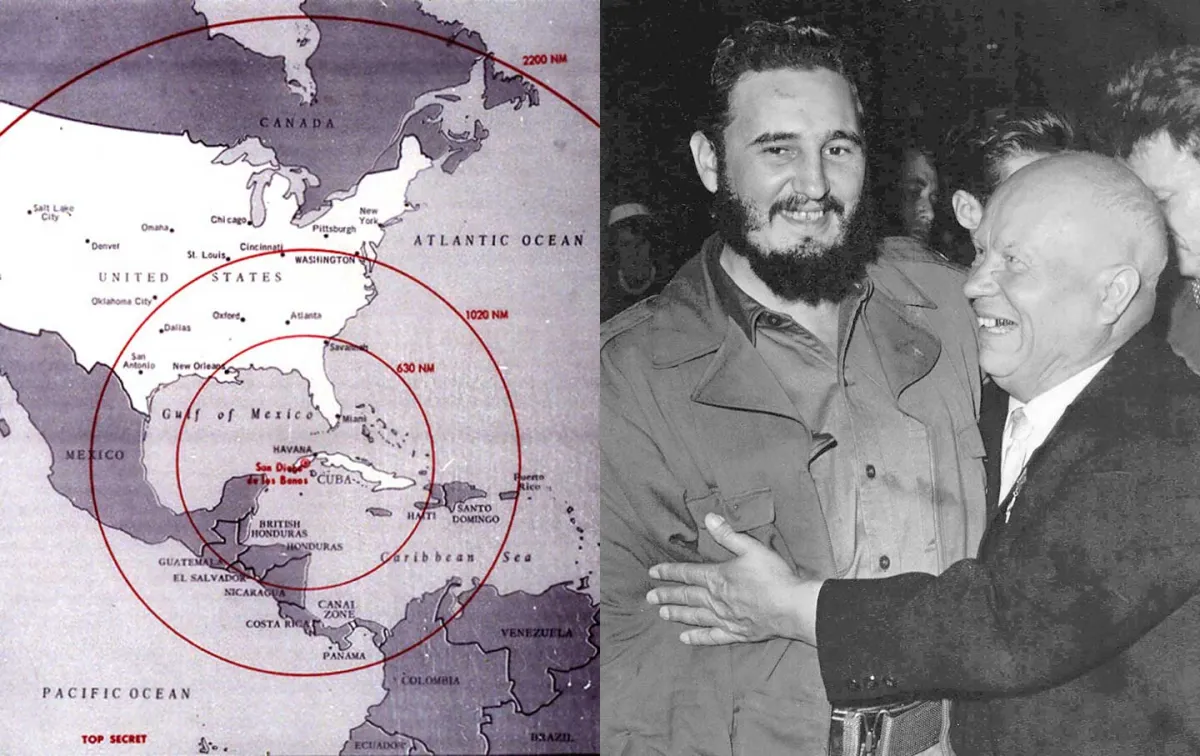 Image from www.thenation.com
Years later, a colleague would describe Gabriel's approach: "He never tried to be the smartest guy in the room. He tried to understand everyone else in the room. That's a much rarer skill."
It was the same skill he'd developed as a child in Mississippi, watching and learning, figuring out how to navigate a world that seemed designed to crush him.
The Price of Invisibility
Gabriel retired in 1987 as one of the CIA's most decorated officers. His commendations filled a classified file cabinet. His name appeared in no newspapers, his face in no photographs that would ever see daylight.
This was the bargain he'd made: extraordinary service in exchange for permanent invisibility. For a man who'd grown up in a world that tried to make him invisible anyway, it might have seemed like a cruel irony.
But Gabriel saw it differently. He'd spent his career proving that the most powerful weapon in intelligence work isn't technology or training—it's the ability to understand people. And that ability, forged in the cotton fields of Mississippi, had helped keep the world from tearing itself apart.
The Lesson in the Fields
James Gabriel's story remains largely untold, buried in classified files that may never see daylight. But his legacy lives on in a simple truth: sometimes the people society overlooks possess exactly the skills society needs most.
The boy who learned to read faces in the cotton fields became the man who could read the room when the stakes were highest. His outsider perspective—born from hardship, shaped by discrimination—gave him insights that no amount of privilege could provide.
In the end, the very experiences that were supposed to limit him became the foundation of his extraordinary service. The cotton fields had taught him everything he needed to know about survival, trust, and human nature.
The CIA just gave him a bigger stage to use those lessons.