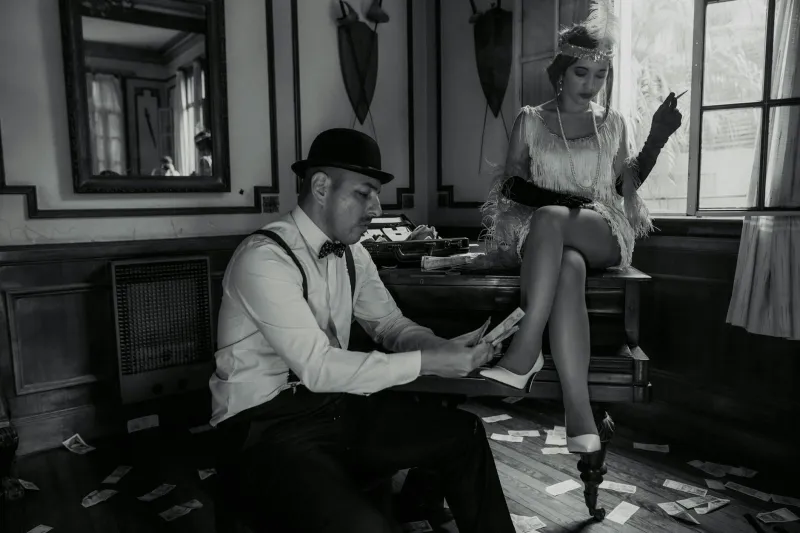
The Widow Who Punched Her Way to Power: How Desperation Built Boxing's First Female Empire
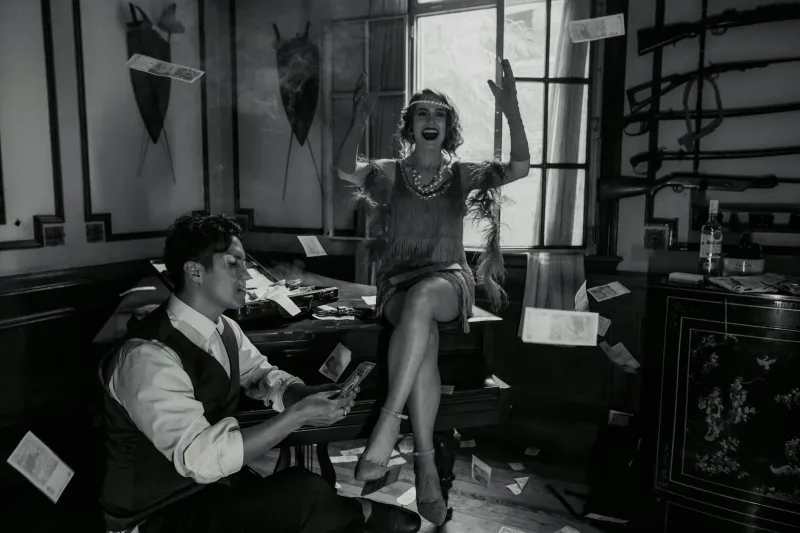
When Survival Becomes Strategy
In 1919, Belle Martell stood in the kitchen of her San Francisco boarding house, staring at a stack of unpaid bills and four hungry children. Her husband had died in the influenza pandemic, leaving her with nothing but debt and a building she couldn't afford to maintain. She had two choices: lose everything or find a way to make money that didn't exist in 1919 for women like her.
 Photo: San Francisco, via www.worldatlas.com
 Photo: Belle Martell, via lookaside.fbsbx.com
What happened next would transform both Belle's life and the entire landscape of American boxing. But it didn't start with any grand plan or boxing expertise. It started with pure desperation and a chance conversation that changed everything.
The Accidental Education
Belle's boarding house sat three blocks from the Olympic Club, where San Francisco's boxing matches were held. She'd never attended a fight — proper women didn't — but she'd noticed the well-dressed men who walked past her windows every Friday night, cigars glowing, talking loudly about bets and fighters.
 Photo: Olympic Club, via alchetron.com
One evening, a regular boarder named Jimmy Dunn came home bloodied and broke. He'd lost his week's wages betting on a fighter who'd been knocked out in the second round. As Belle cleaned his wounds, Dunn explained the fight game with the bitter wisdom of a man who'd lost everything.
"The fighters get peanuts," he told her. "The real money goes to whoever puts on the show. But you gotta know the angles, Belle. You gotta know which fighters are real and which ones are just pretty boys who'll fold when it gets rough."
Belle listened carefully. She was already running a business — keeping boarders fed and happy required understanding human nature, managing money, and solving problems on the fly. The boxing business, as Dunn described it, sounded remarkably similar.
The First Fight
Within a month, Belle had convinced Dunn to introduce her to the local boxing scene. She attended her first fight not as a spectator, but as a student. She watched how the crowd reacted, how money changed hands, how fighters were managed and marketed.
What she saw was chaos masquerading as business. Promoters made decisions based on ego rather than profit. Fighters were poorly managed and worse promoted. Most importantly, she realized that the entire operation was run by men who had never had to stretch a dollar or manage a household budget.
Belle saw opportunity in the inefficiency.
Her first promotion was a disaster by traditional standards. She convinced two local fighters to headline a card in the back room of a downtown saloon, promising them a percentage of the gate rather than a flat fee. When only thirty people showed up, she lost money. But she learned something valuable: the fighters appreciated being treated as partners rather than hired hands.
Building Loyalty Through Innovation
While established promoters treated fighters as interchangeable commodities, Belle began building relationships. She visited fighters in their homes, met their families, understood their financial pressures. She advanced money when they needed it, helped them find work between fights, and most importantly, she kept her word.
This approach was born from necessity — Belle couldn't compete with established promoters on reputation or connections. But her boarding house experience had taught her that people would work harder for someone who genuinely cared about their welfare.
Within two years, Belle had assembled a stable of fighters who refused to work for anyone else. Not because she paid them more, but because she paid them reliably and treated them with respect.
The Psychology of Promotion
Belle's background managing boarders had given her an unexpected expertise in reading people and managing personalities. She applied these skills to both fighters and audiences with remarkable results.
She understood that fights needed stories, not just athletes. Belle created narratives around her fighters that made audiences emotionally invested in the outcomes. She promoted Irish fighters to Irish neighborhoods, Italian fighters to Italian communities, and always emphasized local connections that made crowds feel personally invested.
More importantly, she understood that women controlled household spending decisions. While male promoters focused exclusively on attracting men to fights, Belle began marketing to wives and mothers. She emphasized the athletic skill and personal character of fighters, making boxing matches seem less like barbaric spectacles and more like sporting events that respectable families could attend.
Breaking the Old Boys' Network
By 1925, Belle was promoting fights throughout Northern California. The established boxing community initially dismissed her as a novelty, but their attitude changed when her events consistently outdrew theirs.
Belle's success forced the boxing establishment to confront an uncomfortable reality: their traditional approaches weren't working as well as her innovative methods. She was attracting larger, more diverse audiences by treating boxing as entertainment rather than just sport.
The old guard fought back by trying to exclude her from the best venues and fighters. Belle responded by creating her own network of smaller venues and developing unknown fighters into stars. When established promoters refused to let their fighters compete on her cards, she proved that audiences cared more about exciting matches than famous names.
The Empire Expands
By 1930, Belle Martell was the most successful boxing promoter west of Chicago. She was promoting fights in six states, managing dozens of fighters, and had established the first fighter training facility specifically designed to develop unknown talent into headliners.
Her success came from understanding that boxing was fundamentally a relationship business. Fighters performed better when they trusted their promoter. Audiences attended more regularly when they felt connected to the athletes. Venues made more money when events were professionally organized.
These insights seem obvious now, but in the 1920s boxing world, they were revolutionary.
The Reluctant Pioneer
Belle never set out to become a pioneer for women in sports business. She simply needed to feed her children and found herself in an industry that no one else was approaching intelligently. Her methods succeeded not because she was trying to prove a point about women's capabilities, but because desperation had forced her to innovate where comfort had made others complacent.
By the time Belle retired in 1940, she had promoted over 300 professional fights and developed more than 50 fighters who went on to national prominence. More importantly, her business methods had been adopted throughout the boxing industry.
Legacy of Necessity
Belle Martell's story illustrates how American innovation often emerges from the margins. She succeeded in boxing not despite being an outsider, but because being an outsider forced her to approach problems differently.
Her boarding house kitchen had been better preparation for the boxing business than any formal training could have provided. Managing diverse personalities, stretching limited resources, and building loyalty through personal attention were exactly the skills the boxing industry needed but had never developed.
When Belle died in 1954, the obituaries called her boxing's "first lady." But she had never wanted to be first — she had simply wanted to survive. Her empire was built not from ambition, but from the recognition that sometimes the best business opportunities exist in industries that everyone else is running poorly.