Building in the Dark: How One Architect Revolutionized Design After Losing His Sight
The phone call came on a Tuesday morning in 1952. Robert Mitchell had been experiencing headaches for weeks, but nothing prepared him for what the doctor told him: a rare neurological condition was rapidly destroying his optic nerves. Within six months, the 45-year-old architect who had spent two decades designing sleek modernist buildings across the Pacific Northwest would be completely blind.
 Photo: Robert Mitchell, via f4.bcbits.com
Most people assumed his career was over. Mitchell had other plans.
The World Goes Dark
Before his diagnosis, Mitchell's architectural firm in Seattle was riding high. His clean-lined office buildings and residential developments had earned him a reputation as one of the region's most promising young talents. He was known for structures that seemed to float above their foundations, all glass and steel reaching toward the sky.
But as his vision faded over those six brutal months, Mitchell found himself questioning everything he thought he knew about design. "I realized I'd been designing for the eye alone," he later wrote in his memoir. "I'd forgotten that people actually had to live and work inside these spaces."
The transition wasn't smooth. Mitchell's business partners quietly began discussing buyout options. Clients started requesting meetings with "the other architects" on projects. The assumption was universal: how could someone design buildings they couldn't see?
Touch Becomes Vision
Mitchell refused to accept that blindness meant retirement. Working with his longtime assistant, Sarah Chen, he began developing an entirely new design process built around tactile models and spatial memory.
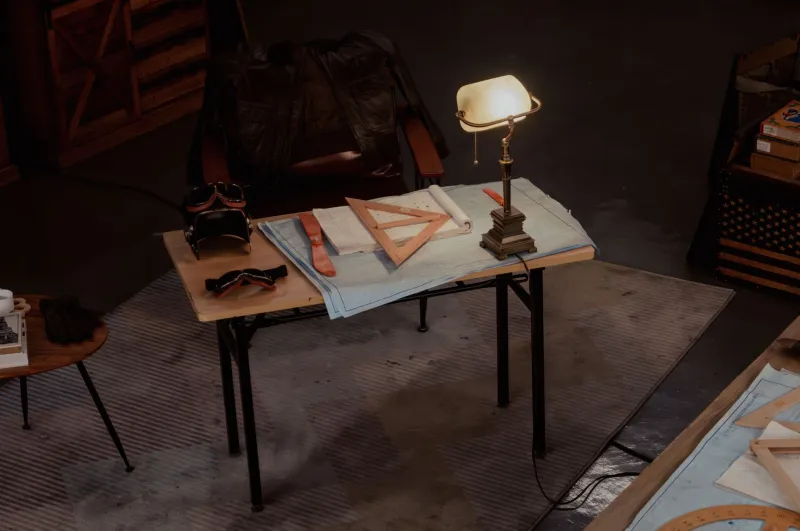
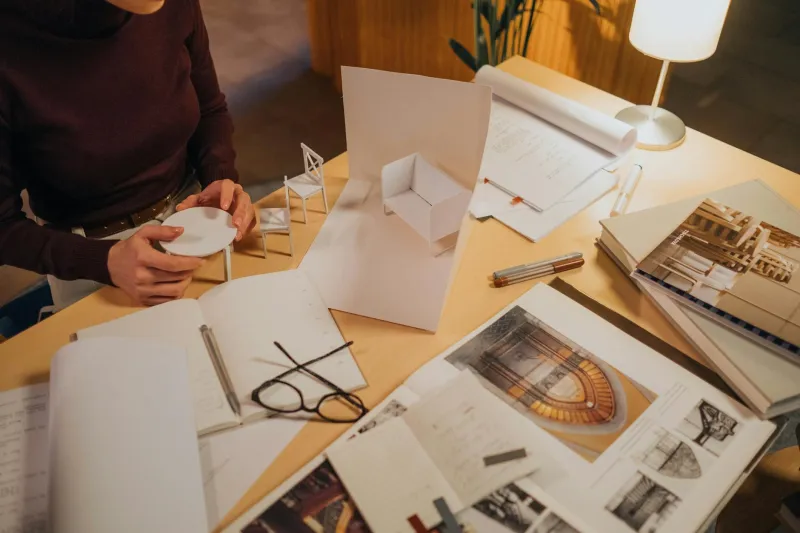
Instead of blueprints, Mitchell worked with intricate three-dimensional models made from clay, wood, and wire. He would spend hours running his hands over these miniature buildings, feeling the flow between rooms, the relationship between indoor and outdoor spaces, the way light would move through windows he could no longer see but could sense through temperature changes on his skin.
"I started designing from the inside out," Mitchell explained in a 1960 interview. "Instead of asking how a building would look, I asked how it would feel to move through it. How would footsteps sound in the lobby? Where would someone naturally want to pause? How would the morning sun warm your back as you climbed the stairs?"
Chen became his eyes, but Mitchell insisted she describe spaces in terms of sensation rather than appearance. "Don't tell me the wall is white," he would say during site visits. "Tell me if it feels cold or warm, if it echoes or absorbs sound, if it makes the space feel larger or smaller."
The Breakthrough Project
Mitchell's first major commission after losing his sight came in 1955: a new public library for the city of Portland. The city council was skeptical, but the project's tight budget meant few established firms were interested.
What Mitchell delivered changed everything.
The Portland Central Library broke every rule of 1950s institutional design. Instead of imposing marble facades and echoing halls, Mitchell created a building that seemed to breathe. Reading rooms were positioned to catch natural light at different times of day. Corridors curved gently, encouraging discovery rather than efficient navigation. The children's section featured alcoves at different heights, creating intimate spaces that felt safe and enclosed.
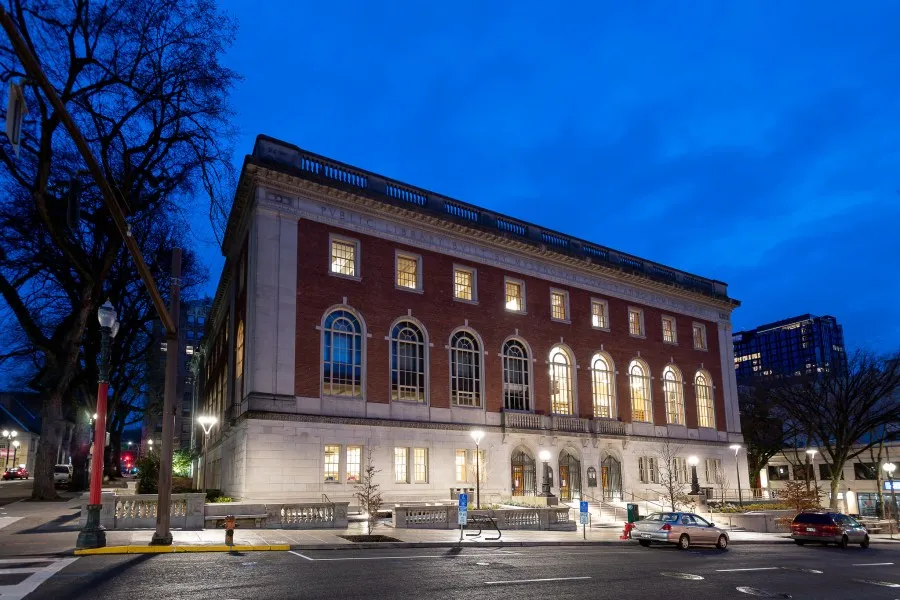 Photo: Portland Central Library, via www.koin.com
Most remarkably, Mitchell had designed acoustic zones throughout the building. Quiet study areas were naturally separated from busier sections not by walls but by careful attention to how sound moved through space. Visitors reported feeling unusually calm and focused, though they couldn't quite explain why.
A New Language of Space
Word spread quickly through architectural circles. Mitchell's post-blindness work displayed an almost supernatural understanding of how humans actually experienced buildings. His designs prioritized comfort over spectacle, flow over efficiency, human scale over monumental grandeur.
The American Institute of Architects, which had quietly removed Mitchell from several committees after his diagnosis, began inviting him to lecture on "sensory design." Architecture schools added his work to their curricula. Young architects started visiting his Seattle office to learn his tactile modeling techniques.
"Bob taught us that we'd been designing buildings for cameras instead of people," said Margaret Lawson, who worked as Mitchell's apprentice in the late 1950s. "He showed us that the most important parts of a building are the parts you can't photograph."
Mitchell went on to design seventeen major buildings over the next two decades, including a revolutionary hospital in San Francisco that reduced patient stress through careful attention to natural light and acoustic comfort, and a Seattle office complex that workers consistently rated as the most pleasant in the city despite its modest budget.
The Legacy of Limitation
When Mitchell died in 1978, his obituary in Architectural Review noted that his greatest designs came after he lost his sight. "Mitchell's blindness forced architecture to remember its fundamental purpose," the article concluded. "Buildings exist not to be seen but to be inhabited."
Today, many of Mitchell's innovations—acoustic zoning, natural lighting patterns, tactile navigation cues—are standard elements in accessible design. But his deeper lesson remains radical: sometimes losing what we think we need most can reveal what we actually need most.
Mitchell's final project, completed just months before his death, was a meditation garden for a Seattle hospital. Visitors describe it as extraordinarily peaceful, though few can articulate exactly why. The secret lies in details invisible to the eye: the way footpaths curve to slow your pace, the positioning of benches to catch afternoon warmth, the selection of plants that release different scents as you move through the space.
It's a garden designed not for sight but for presence—the ultimate achievement of an architect who learned to see with his hands.