The Invisible Architect: How Marie Linehan Built the Harlem Globetrotters While History Forgot Her Name
The Woman Behind the Curtain
In the summer of 1926, when Abe Saperstein first gathered five young Black basketball players in Chicago to form what would become the Harlem Globetrotters, he had vision, ambition, and exactly $48 in his pocket. What he didn't have was the infrastructure to turn that vision into reality. For that, he relied on a remarkable woman whose name appears in no official histories of the team, whose contributions were deliberately obscured, and whose story has been pieced together from fragments — court documents, personal letters, and the fading memories of players' families.
 Photo: Harlem Globetrotters, via media-cldnry.s-nbcnews.com
Marie Linehan was a seamstress, entrepreneur, and unofficial banker who made the Harlem Globetrotters possible during their crucial first years. While Saperstein received credit for founding the team, Linehan provided the foundation that allowed them to survive, travel, and eventually thrive in an America where Black athletes faced barriers that extended far beyond the basketball court.
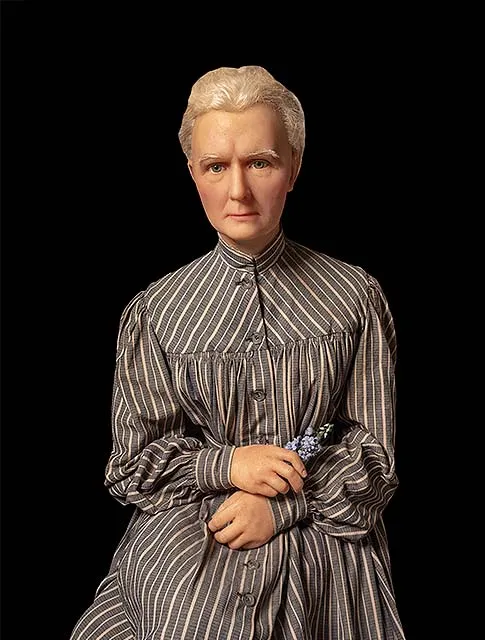 Photo: Marie Linehan, via www.potterswaxmuseum.com
Building Dreams with Thread and Credit
Linehan operated a small tailoring shop on Chicago's South Side, serving a clientele that ranged from working-class families needing alterations to performers requiring stage costumes. When Saperstein approached her about creating uniforms for his new basketball team, she faced a decision that would define both their futures.
The players had no money upfront, and Saperstein's promises of future payment were backed by nothing more than enthusiasm and an untested business plan. Any reasonable businesswoman would have demanded cash before cutting fabric. Instead, Linehan studied the young men Saperstein had assembled — their discipline, their talent, their hunger for opportunity — and made a bet that would prove prophetic.
She created the first Globetrotter uniforms on credit, but her contribution went far beyond simple tailoring. Linehan understood that in 1926 America, presentation could mean the difference between being taken seriously and being dismissed before the game even began. She designed uniforms that projected professionalism and athleticism, ensuring that when these young Black men walked onto predominantly white basketball courts, their appearance commanded respect.
More Than Seamstress, Less Than Partner
As the team began traveling, Linehan's role expanded in ways that revealed both the opportunities and limitations facing Black women entrepreneurs in the 1920s. When Jim Crow laws made finding accommodations nearly impossible, players often stayed in her home. When transportation costs exceeded the team's meager earnings, she quietly covered the shortfall. When equipment needed repair or replacement, she provided solutions that kept the Globetrotters on the road.
Yet despite her essential role, Linehan was never acknowledged as a business partner or co-founder. The social conventions of the era made it impossible for a Black woman to claim public credit for enabling a venture that was already challenging racial boundaries. Her contributions had to remain invisible to protect both the team's credibility and her own safety.
This invisibility was strategic, not accidental. In an America where Black businesses faced constant scrutiny and potential violence, Linehan's behind-the-scenes role allowed her to provide crucial support without attracting unwanted attention. She understood that sometimes the most powerful position is the one nobody notices.
The Economics of Invisibility
Records from Linehan's estate, discovered decades later, reveal the full scope of her financial support for the early Globetrotters. She regularly advanced money for travel expenses, equipment, and even player salaries when gate receipts fell short. Her tailoring business essentially served as an unofficial bank for the team, providing credit that no legitimate financial institution would have extended to a barnstorming Black basketball team.
The arrangement benefited both parties, but the risks were entirely Linehan's. If the Globetrotters failed — as most observers expected they would — she would absorb the financial losses while Saperstein could simply move on to his next venture. The fact that she was willing to make such investments suggests either remarkable business acumen or extraordinary faith in the team's potential.
Linehan's financial records also reveal something else: she was building her own small empire while supporting the Globetrotters. Her tailoring business expanded during the late 1920s, suggesting that her association with the team actually enhanced rather than drained her resources. She understood that sometimes the best investment is in other people's dreams.
The Unsung Infrastructure of Dreams
What made Linehan's contributions particularly crucial was her understanding of the practical challenges facing Black entertainers in Jim Crow America. She didn't just provide uniforms; she created a support system that addressed everything from lodging to logistics. Her home became an unofficial headquarters where players could rest, plan routes, and strategize about upcoming games.
She also served as an intermediary with white business owners who might book the team but were uncomfortable dealing directly with Black athletes. Linehan's reputation as a skilled businesswoman and her ability to navigate between different communities made her invaluable in securing venues and negotiating contracts.
This role required exceptional diplomatic skills and deep understanding of racial dynamics. Linehan had to present herself as professional and unthreatening while advocating for fair treatment of the players. She walked a tightrope that demanded perfection — any misstep could have jeopardized not just her business, but the team's future opportunities.
The Price of Progress
As the Harlem Globetrotters gained national recognition in the 1930s, Linehan's direct involvement began to decrease. The team's success brought new investors and corporate sponsors who could provide the financial backing that had once come from her personal resources. Professional management replaced the informal arrangements that had characterized the early years.
This transition was probably inevitable, but it came at a cost that went beyond simple business evolution. As the Globetrotters became an established entertainment enterprise, the story of their founding was simplified and sanitized. Saperstein's role as visionary founder was emphasized, while the complex network of support that had made that vision possible — particularly Linehan's contributions — faded from official narratives.
The erasure wasn't necessarily malicious, but it reflected broader patterns in how American success stories are told. The contributions of Black women, especially those who operated behind the scenes, often disappear from historical records not because they were unimportant, but because acknowledging them complicates simple narratives about individual genius and bootstrap success.
Recovering the Hidden History
Reconstructing Linehan's story requires reading between the lines of official histories and following paper trails that were never meant to preserve her legacy. Court documents from property disputes reveal her real estate investments. Personal letters discovered in family attics mention her ongoing relationship with former players. Oral histories collected decades later include passing references to "the lady who helped us when we had nothing."
These fragments paint a picture of a woman who understood that sometimes the most effective way to change the world is to make other people's changes possible. Linehan's story challenges us to look beyond the celebrated figures in any success story and ask: who else was in the room? Who provided the infrastructure? Who took the risks that made the visible achievements possible?
The Legacy of Strategic Invisibility
Today, as the Harlem Globetrotters continue to entertain audiences worldwide, Marie Linehan's name appears on no plaques, no hall of fame walls, no official histories. Yet her influence persists in the institution she helped create and the precedent she established for Black women entrepreneurs who understood that sometimes power comes from being underestimated.
Her story reminds us that behind nearly every celebrated American institution is someone whose contributions were essential but unacknowledged. These invisible architects shaped our culture while remaining outside its official narratives, their legacies preserved not in monuments but in the continuing existence of the dreams they made possible.
In an era when we're finally beginning to recognize the full complexity of American achievement, Marie Linehan's story offers both inspiration and challenge. It shows us what's possible when someone chooses to invest in other people's potential, even when that investment will never receive public recognition. And it asks us to consider: how many other essential stories are still waiting to be discovered in the shadows of our celebrated histories?