One Letter from a Prison Cell That Broke the Law Wide Open

The pencil was stubby. The paper was prison-issue. The handwriting was careful, deliberate — the kind of slow, deliberate script that belongs to someone who didn't get much schooling but understood that every word mattered.
Clarence Earl Gideon was fifty years old, sitting in a Florida state penitentiary on a breaking-and-entering conviction, and he had made a decision that most people in his position would never have the nerve to make. He was going to sue the United States government. By himself. From a prison cell. With no legal training whatsoever.
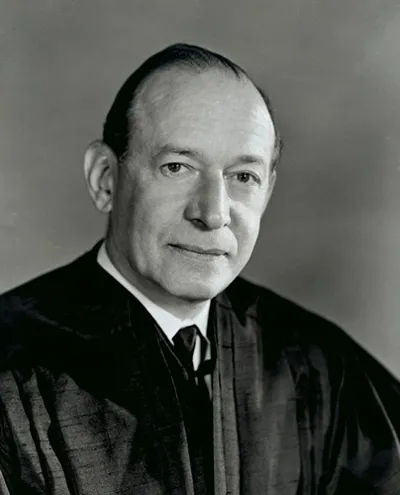 Photo: Clarence Earl Gideon, via historicmissourians.shsmo.org
History, it turns out, had been waiting for someone exactly like him.
The Man the System Had Already Discarded
Before we get to the Supreme Court, it's worth spending a moment with the man himself — because Gideon's life before that pencil hit paper was not the stuff of conventional heroism.
Born in 1910 in Hannibal, Missouri, Gideon dropped out of school in the eighth grade and spent his early years drifting. He was in and out of reformatories as a teenager, convicted of petty theft more than once, and largely invisible to the world at large. He worked odd jobs, got married several times, had children he struggled to support, and moved around the South like a man who had never quite found solid ground beneath his feet.
 Photo: Hannibal, Missouri, via visithannibal.com
By 1961, when police in Panama City, Florida, arrested him on suspicion of breaking into a pool hall and stealing beer, wine, and change from a cigarette machine, Gideon was just another small-time drifter with a record. The kind of man courtrooms processed and forgot.
At his trial, Gideon asked the judge to appoint him a lawyer. He couldn't afford one. The judge told him Florida law only guaranteed appointed counsel in capital cases — cases where a man's life was on the line. Petty theft didn't qualify. Gideon would have to defend himself.
He did his best. It wasn't enough. The jury convicted him in about an hour. He was sentenced to five years.
The Jailhouse Scholar
Here's where Gideon's story pivots from sad to extraordinary.
Instead of accepting his fate — which would have been the rational, statistically likely response for a man in his position — Gideon walked into the prison library and started reading. He read about law. He read about constitutional rights. He read about precedent and petition and the machinery of justice that had, in his view, chewed him up and spat him out unfairly.
And the more he read, the more convinced he became that the Sixth Amendment — which guarantees the right to counsel in criminal prosecutions — meant what it said. All criminal prosecutions. Not just the ones where someone might die.
In January 1962, Gideon sat down and hand-wrote a five-page petition to the United States Supreme Court. He called it an in forma pauperis petition — a legal term meaning he was too poor to pay filing fees. He argued that Florida had violated his constitutional rights by denying him a lawyer.
The Supreme Court received thousands of such letters every year. Most went nowhere. But something about Gideon's case caught the attention of the justices. They agreed to hear it.
Nine Justices, One Drifter, and a Question That Changed Everything
The Supreme Court appointed one of Washington's most respected attorneys — Abe Fortas, who would later become a Supreme Court justice himself — to argue Gideon's case. The irony was not lost on anyone: a man who had been denied a lawyer in a Florida courtroom now had one of the finest legal minds in America arguing on his behalf before the nation's highest court.
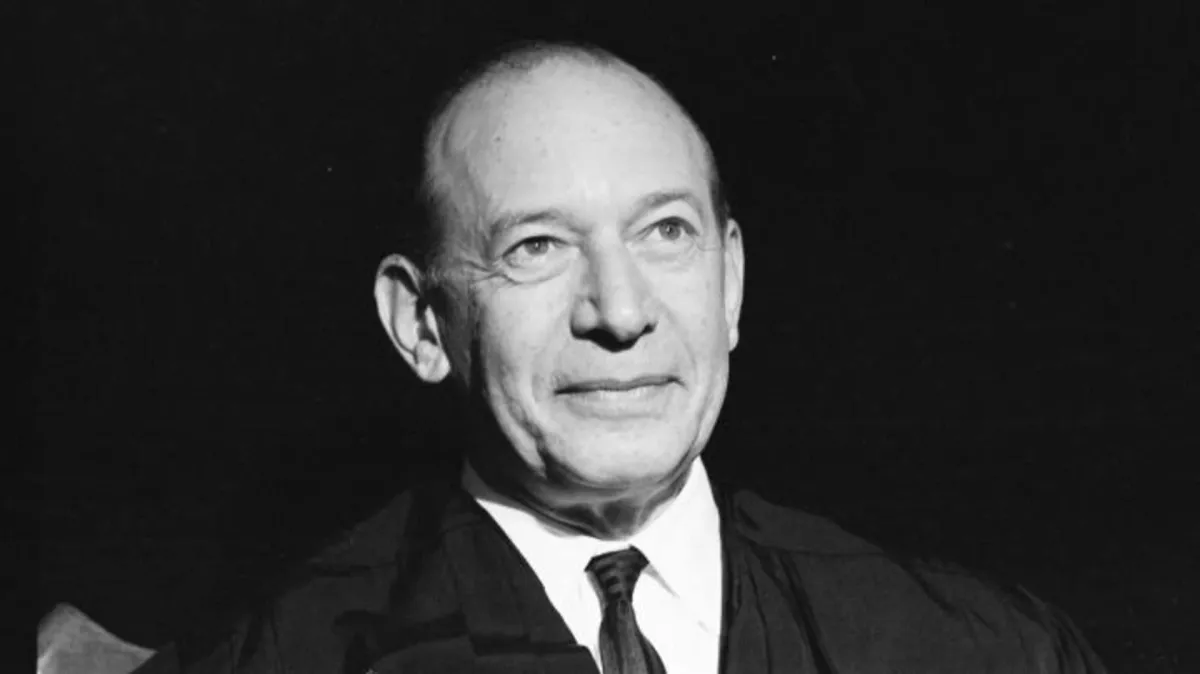 Photo: Abe Fortas, via res.cloudinary.com
On March 18, 1963, the Supreme Court ruled unanimously in Gideon v. Wainwright. The decision was sweeping and unambiguous: the Sixth Amendment's guarantee of the right to counsel applied to all state criminal proceedings, not just capital cases. Any person charged with a serious crime who could not afford an attorney had the constitutional right to have one appointed.
Justice Hugo Black, writing for the court, put it plainly: "Lawyers in criminal courts are necessities, not luxuries."
With that sentence, the American legal system changed overnight. States were required to establish public defender offices. Thousands of prisoners across the country who had been convicted without legal representation were entitled to new trials. The case became one of the most cited in American constitutional history.
Gideon himself was retried in Florida — this time with a lawyer. The jury acquitted him in less than an hour.
What His Life After the Verdict Tells Us
If this were a Hollywood story, Gideon would have walked out of that Florida courthouse into a life of comfort and recognition. He didn't. He went back to drifting. He struggled with poverty and health problems for the rest of his life. He was arrested at least once more on minor charges. He died in 1972, largely unknown to the general public, in a cheap motel in Fort Lauderdale.
But here's the thing about Gideon's legacy: it was never really about him. It was about what one person, with almost nothing, could set in motion when they refused to accept that the rules didn't apply to them.
Before Gideon, most states had no functioning public defender system. After it, they had to build one. The American Civil Liberties Union estimates that the ruling has directly affected the legal proceedings of tens of millions of Americans in the six decades since the decision came down. Every public defender who has ever stood beside a frightened, broke defendant in a courtroom is, in some small way, a product of a stubby pencil and a prison library in Florida.
The Lesson in the Letter
There's a reason Gideon's story still resonates, and it has nothing to do with legal theory.
It's about what happens when someone who has been counted out — repeatedly, systematically, by the very institutions designed to protect them — decides that the counting is wrong. Gideon didn't have credentials. He didn't have connections. He didn't have money or influence or a platform. He had a grievance, a library card, and the stubbornness to believe that the law meant what it said.
That combination turned out to be enough to move mountains.
History books tend to celebrate the lawyers and the justices, the eloquent arguments and the elegant decisions. But the engine of Gideon v. Wainwright was a man that society had written off a dozen times over, sitting alone in a cell, deciding that this time he wasn't going to let it go.
Grit, it turns out, doesn't require a law degree. It just requires the refusal to stop.