The Sky She Kept Secret: How a Midwest Farm Wife Became One of America's Most Fearless Pilots
The Sky She Kept Secret: How a Midwest Farm Wife Became One of America's Most Fearless Pilots
The thing about being overlooked is that nobody watches you. And if nobody watches you, you can do almost anything.
Dorothy Vance figured this out somewhere around 1934, crouching in the seat of a secondhand Piper Cub at a grass airstrip outside of Salina, Kansas, trying to remember everything the young instructor had told her about throttle and aileron before her thirty minutes of borrowed time ran out. She was thirty-one years old, the wife of a wheat farmer, the mother of two children, and, as far as her husband and her neighbors and essentially everyone she knew was concerned, out doing errands in town.
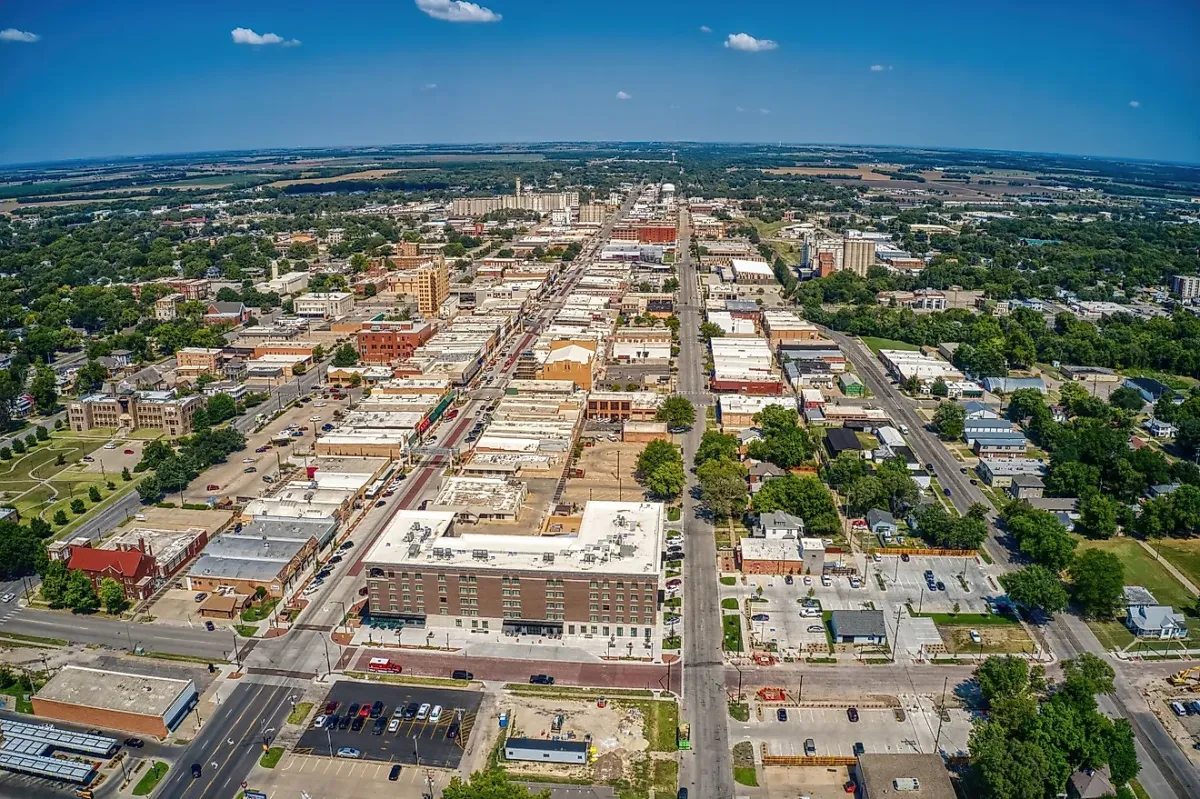 Photo: Salina, Kansas, via www.worldatlas.com
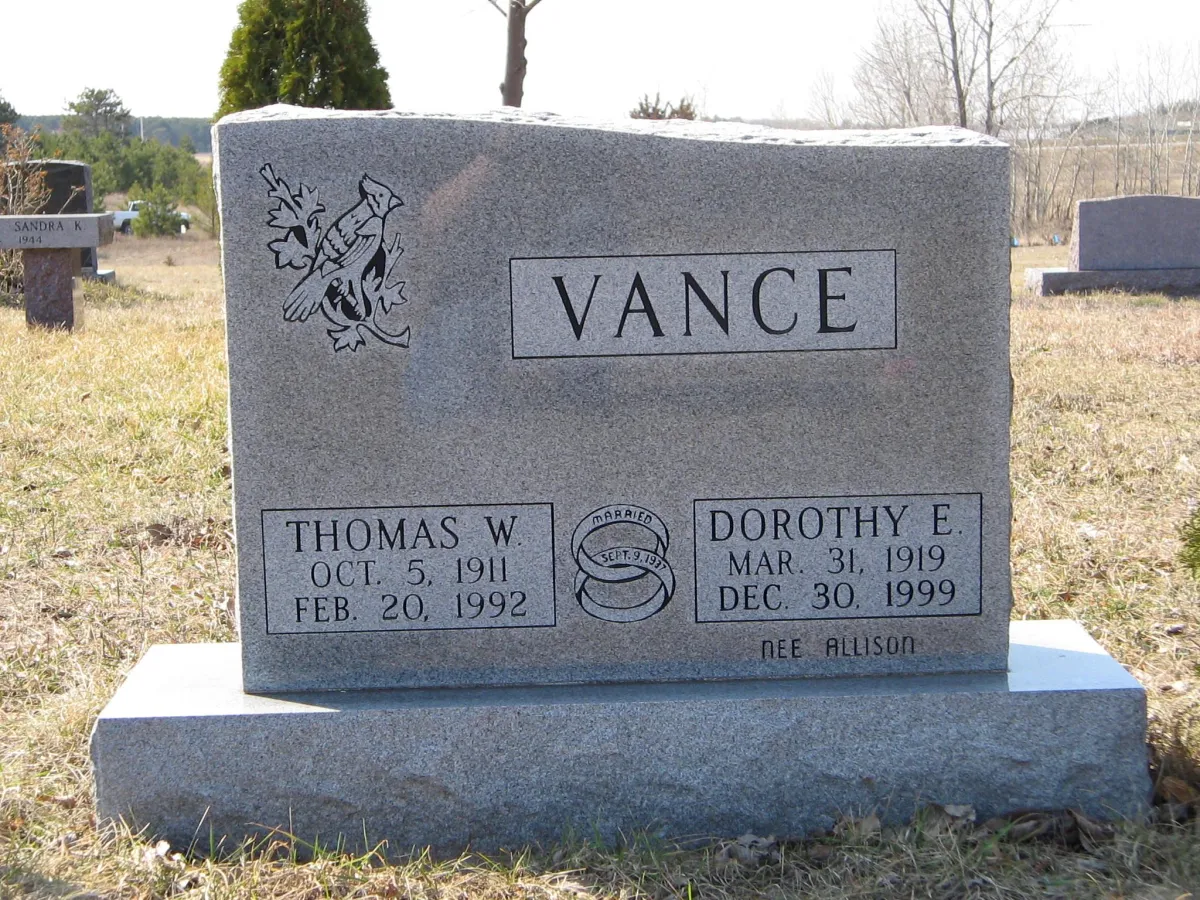 Photo: Dorothy Vance, via images.findagrave.com
She was not doing errands in town.
What the Depression Made Possible
The 1930s were a brutal decade to be a farmer in the American Midwest. The Dust Bowl didn't just destroy crops — it destroyed the social infrastructure that held rural communities together. People left. Businesses closed. The rhythms that had organized daily life for generations came apart.
For Dorothy Vance, the collapse created a crack she could move through. Her husband, Earl, spent most of his days managing what was left of their farm operation — negotiating with creditors, driving to meetings, trying to hold things together. He was too busy and too exhausted to track her schedule closely. Her children were in school. And the airfield outside of Salina, which had once served a modest regional charter operation, was now so desperate for revenue that it offered flight lessons at rates that were almost laughable — provided you were willing to fly in off-hours, in whatever aircraft happened to be available.
Dorothy had been watching the planes since childhood. Her father had taken her to an air show in Wichita when she was nine, and she had never entirely gotten over it — the impossible fact of a machine leaving the ground, the casual defiance of everything that was supposed to be fixed and immovable. She had filed that feeling away for twenty-two years, the way you file away something you want very badly and cannot imagine ever actually having.
Then the Depression made it cheap enough.
Borrowed Hours, Borrowed Money
She didn't tell Earl. This is the part that requires some explanation — not because Dorothy Vance was a dishonest person, but because the alternative was a conversation she already knew the outcome of. Earl was not a cruel man. He was a practical one. And in 1934, in Kansas, a farm wife spending money on flying lessons was not practical. It was, in the vocabulary of the time and place, foolish. Possibly embarrassing.
So she didn't ask. She saved. She told Earl the grocery bills were slightly higher than they were and put the difference aside. She sold eggs at a roadside stand and kept the proceeds in a coffee can in the back of the pantry. It took eight months to accumulate enough for the first lesson.
Her instructor was a twenty-four-year-old former barnstormer named Tommy Hatch who, by his own later admission, didn't take her entirely seriously at first. "She was quiet," he said in an interview decades later. "Polite. Didn't ask a lot of questions. I figured she'd do two or three lessons and quit."
She did not quit.
Hatch later described her as the most methodical student he'd ever taught — not the most naturally gifted, but the most prepared. She came to every lesson having reviewed her notes from the previous one. She asked precise questions. She practiced the physical movements at home, he discovered, by sitting in a kitchen chair with a broom handle between her knees, running through control inputs in her head.
"She treated it like a subject in school," he said. "Like something that could be learned if you put in the work."
The License Nobody Saw Coming
Dorothy earned her private pilot's license in the spring of 1936. She was thirty-three. She did not tell her husband for another four months.
When she finally did, his response was — according to family accounts that have been passed down through two generations — a long silence followed by the question: "How long has this been going on?"
"A while," she said.
Earl Vance did not support his wife's flying. He also did not stop it. This distinction matters. He made his displeasure known and then, in the way of a man who has other things to worry about, let it go. The farm was still failing. The creditors were still calling. Dorothy's flying, as long as it didn't cost more than he knew about, receded into the category of things he didn't have energy to fight.
She took this as permission.
The Invisible Record
Over the next fifteen years, Dorothy Vance built one of the most remarkable civilian aviation records in the American Midwest — and almost nobody noticed, which suited her fine.
She earned her instrument rating in 1939. Her commercial certificate in 1941. When the Women Airforce Service Pilots program launched in 1942, she applied and was accepted, flying military aircraft as a ferry pilot — transporting planes from factories to air bases across the country — while her children stayed with Earl's mother and her husband told people his wife was doing war work, which was true but didn't quite capture the full picture.
After the war, she returned to Kansas and kept flying. She entered regional competitions — the kind of small-circuit events that drew little press attention and fewer spectators — and won them with a consistency that became, among the tight community of Midwest aviators, something of a quiet legend. Other pilots knew who she was. The broader world largely didn't.
By the time she was in her late fifties, she had logged more hours than most commercial pilots. She had won more regional competitions than she could remember the exact number of. She had flown in weather conditions that younger, male pilots with better equipment had turned back from.
She had done almost all of it without anyone outside of aviation paying the slightest attention.
What Invisibility Gave Her
There is a version of Dorothy Vance's story that frames her obscurity as a tragedy — a talented woman overlooked by a world that wasn't ready to see her. That version is not wrong, exactly. But it misses something she herself seemed to understand.
Being overlooked meant she was never asked to justify herself. Never required to perform her passion for an audience that might have judged it unsuitable. Never subjected to the particular scrutiny that would have come from being a celebrated woman in a field that was not supposed to be hers.
The invisibility was a gift, even if it was a gift she hadn't asked for. It gave her the freedom to fail without consequences, to improve without pressure, to build something extraordinary in the space between what people expected her to be and what she actually was.
"I never flew to prove anything to anyone," she said in a 1971 interview with a small Kansas newspaper — one of the very few times she spoke publicly about her flying career. "I flew because it was the truest thing I ever did."
She died in 1983 at the age of eighty, having logged over twelve thousand flight hours. Her logbooks, meticulous and complete from that first lesson in 1934 to her last flight in 1979, are held at a small aviation museum in Wichita.
Most people who visit have never heard of her. She would probably have considered that just fine.