The Gatekeepers Who Got It Spectacularly Wrong: Seven Rejection Letters That Accidentally Predicted Genius

When Expert Opinion Meets Future Legend
Somewhere in America, filing cabinets hold the most expensive mistakes in cultural history. Rejection letters that dismissed novels destined for immortality, business proposals that would birth billion-dollar industries, and talent evaluations that completely missed generational greatness. These aren't just amusing historical footnotes—they're documented proof that sometimes the people paid to recognize potential are the last ones to see it.
Stephen King: "We Are Not Interested in Science Fiction"
The Letter: In 1974, Doubleday rejected Stephen King's Carrie with a terse note: "We are not interested in science fiction which deals with negative utopias. They do not sell."
 Photo: Stephen King, via caps2cdn.adultempire.com
The Reality: Carrie wasn't science fiction—it was horror. But that detail escaped the editor who dismissed what would become King's breakthrough novel. After 30 rejections, Carrie finally found a publisher and sold over 1 million copies in its first year. King's subsequent 60+ novels have sold more than 350 million copies worldwide, making him one of the best-selling authors in history.
The Fire It Lit: King later said the rejections taught him that publishers often don't know what they want until they see it succeeding elsewhere. He kept every rejection letter as motivation, eventually wallpapering his office with them as a reminder that expert opinion is just opinion.
Michael Jordan: "He's Not Tall Enough to Play at This Level"
The Letter: Clifton "Pop" Herring, Jordan's high school basketball coach, cut him from the varsity team in 1978 with the assessment: "Michael has potential, but he's not tall enough to play at this level. Maybe he can develop into a decent player with more height and experience."
 Photo: Michael Jordan, via www.jmautos-casse-auto.fr
The Reality: At 5'10" as a sophomore, Jordan was indeed shorter than ideal for basketball. But Herring missed the combination of work ethic, competitive fire, and athletic intelligence that would transform a skinny teenager into arguably the greatest basketball player ever.
The Fire It Lit: Jordan later credited that rejection as the defining moment of his career. "I wanted to make sure he remembered me," Jordan said about his coach. He wore jersey number 23 in high school partly because it was roughly half of his older brother's number 45—a constant reminder that he was fighting for recognition in his own family, let alone on the court.
Walt Disney: "Lacks Imagination and Has No Good Ideas"
The Letter: In 1919, a Kansas City newspaper editor fired 18-year-old Walt Disney with the explanation: "He lacks imagination and has no good ideas. We suggest he find work more suited to his abilities."
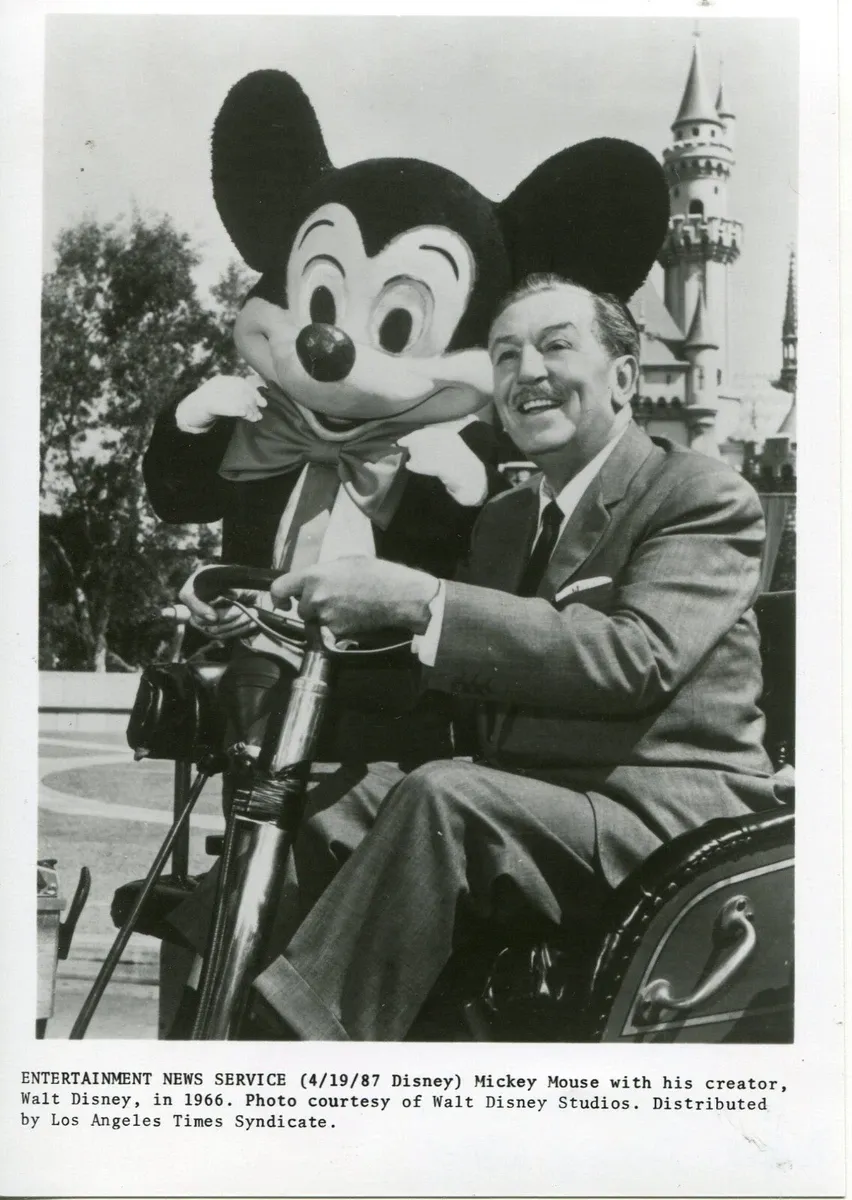 Photo: Walt Disney, via i.ebayimg.com
The Reality: Disney was indeed struggling as a commercial artist, but the editor completely missed his storytelling instincts and innovative vision. Within five years, Disney would create Mickey Mouse and revolutionize animation forever.
The Fire It Lit: Disney kept that rejection letter framed in his office for decades. When reporters asked about his success, he'd point to it and say, "I wanted to prove that imagination was exactly what I had." The experience taught him to trust his creative instincts over conventional wisdom.
Oprah Winfrey: "Unfit for Television News"
The Letter: In 1977, WJZ-TV in Baltimore demoted Oprah Winfrey from news anchor with this assessment: "She is unfit for television news. Too emotional, too personally involved with stories. Suggest reassignment to morning talk show where her emotional nature might be better suited."
The Reality: The demotion was intended as a career setback, but it accidentally discovered Winfrey's true calling. Her "emotional nature" and personal connection to stories would become her greatest strengths in daytime television.
The Fire It Lit: Winfrey later said the rejection forced her to find her authentic voice. "They told me I was too much, so I decided to be even more," she recalled. That decision to amplify rather than suppress her natural empathy would make her one of the most influential media figures in American history.
Colonel Sanders: "The Recipe Is Nothing Special"
The Letter: In 1952, restaurant owner after restaurant owner rejected Harland Sanders' fried chicken recipe with variations of: "The recipe is nothing special. The seasoning is too complex for commercial kitchens. We don't see the market potential."
The Reality: Sanders was 62 years old and nearly broke when he started pitching his chicken recipe. He was rejected 1,009 times before finding his first partner. Those rejections missed the fact that Sanders wasn't just selling a recipe—he was selling a complete system for consistent, high-quality fried chicken.
The Fire It Lit: Each rejection made Sanders more determined to prove his critics wrong. He lived in his car while traveling the country, cooking chicken for restaurant owners until they agreed to try his recipe. His persistence eventually built KFC into a global empire worth billions.
Jerry Seinfeld: "The Show About Nothing Won't Work"
The Letter: NBC executives initially passed on Seinfeld in 1988, writing: "The show about nothing won't work. American audiences need clear storylines and relatable situations. This concept is too abstract for mainstream television."
The Reality: The executives completely misunderstood what made Seinfeld brilliant. The "show about nothing" was actually a show about everything—the tiny, absurd moments that define daily life in America.
The Fire It Lit: Seinfeld and co-creator Larry David used the rejection to refine their vision. They realized they were creating something genuinely new and decided to trust their instincts completely. The show eventually ran for nine seasons and is still generating hundreds of millions in syndication revenue.
J.K. Rowling: "Children Just Aren't Interested in Fantasy Anymore"
The Letter: Twelve publishers rejected Harry Potter and the Philosopher's Stone between 1995 and 1996. Bloomsbury's rejection was typical: "Children just aren't interested in fantasy anymore. The book is too long for the target age group, and the writing is too sophisticated for children but too simple for adults."
The Reality: The publishers missed the fact that Rowling had created something genuinely magical—a children's book that adults would read obsessively, spawning a multi-billion dollar franchise that would define a generation's relationship with reading.
The Fire It Lit: Each rejection made Rowling more determined to prove that children craved sophisticated storytelling. She later said the experience taught her that sometimes you have to create your own audience rather than cater to existing expectations.
The Pattern in the Rejections
These seven rejections share a common thread: each gatekeeper focused on what the creator lacked rather than what they possessed. They measured unconventional talents against conventional standards and found them wanting. But in every case, what the experts saw as weaknesses were actually the seeds of revolutionary strengths.
The lesson isn't that experts are always wrong—it's that true innovation often looks like failure until it succeeds. Sometimes the most valuable thing a rejection can do is force creators to trust their vision completely, to stop trying to fit existing molds and start breaking them instead.
In the end, these rejection letters didn't predict failure—they accidentally predicted the exact opposite. They identified the precise qualities that would make these individuals legendary, they just completely misunderstood their value.