When the Bottom Was the Beginning: Seven Creators Who Made Their Masterwork After the Breakdown
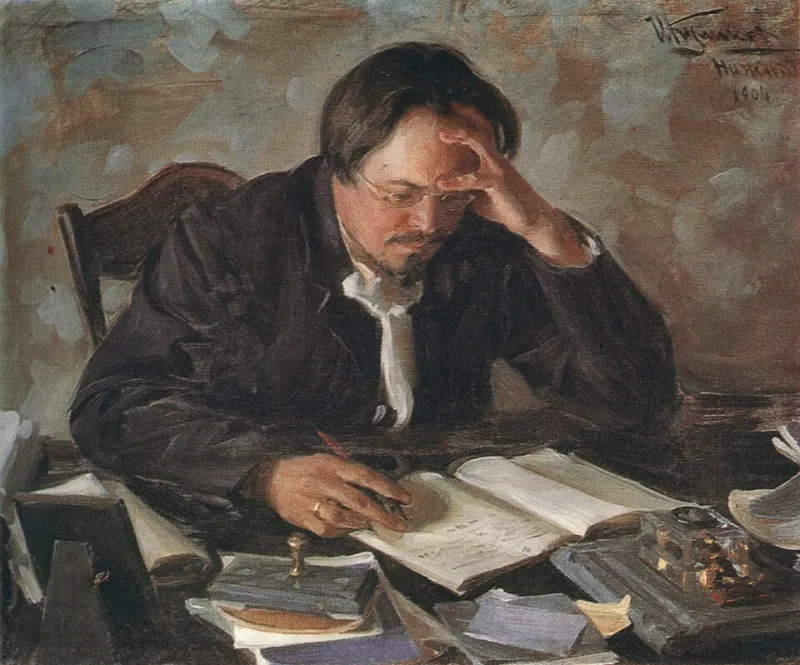
Photo: Ivan Kulikov, Public domain, via Wikimedia Commons
Let's get something straight upfront: mental illness is not a creative superpower. It is not a gift wrapped in suffering. It does not make art better, and it does not make artists stronger. Anyone who has sat in a hospital waiting room or watched someone they love disappear into depression knows this without being told.
And yet.
There is something that sometimes happens on the other side of a breakdown — not because of the suffering, but in spite of it, in the wreckage left behind — where the fear burns away and what's left is something raw and unguarded that audiences recognize as real. These seven Americans found that place. Their stories aren't about romanticizing rock bottom. They're about what some people manage to build once they survive it.
1. William Styron — The Darkness That Wrote Sophie's Choice First, Then Wrote About Itself
William Styron spent decades as one of America's most celebrated novelists before the depression that had quietly stalked him for years finally caught up with him in his sixties. His 1990 memoir Darkness Visible — written in the immediate aftermath of a hospitalization that he genuinely believed might be his last act as a functioning human being — became one of the most important books ever written about mental illness in America.
 Photo: William Styron, via i.ebayimg.com
What's striking about Darkness Visible isn't its literary sophistication. It's its honesty. Styron, who had spent a career constructing elaborate fictional architectures, wrote the memoir with the directness of a man who had nothing left to protect. The fear of judgment, the writer's instinct to shape and perform, the careful management of reputation — all of it had been burned away. What remained was clarity.
The book didn't just find an audience. It changed the conversation. Readers who had never been able to explain their own depression to their families handed the book across dinner tables and said: this. That only happens when a writer has stopped worrying about how they sound.
2. Art Buchwald — The Humor Column That Came from a Psychiatric Ward
Art Buchwald was America's most widely syndicated political humorist for most of the second half of the twentieth century. He was also, by his own account, a man who spent decades outrunning a depression rooted in a childhood that included a mother institutionalized for mental illness and years in foster care.
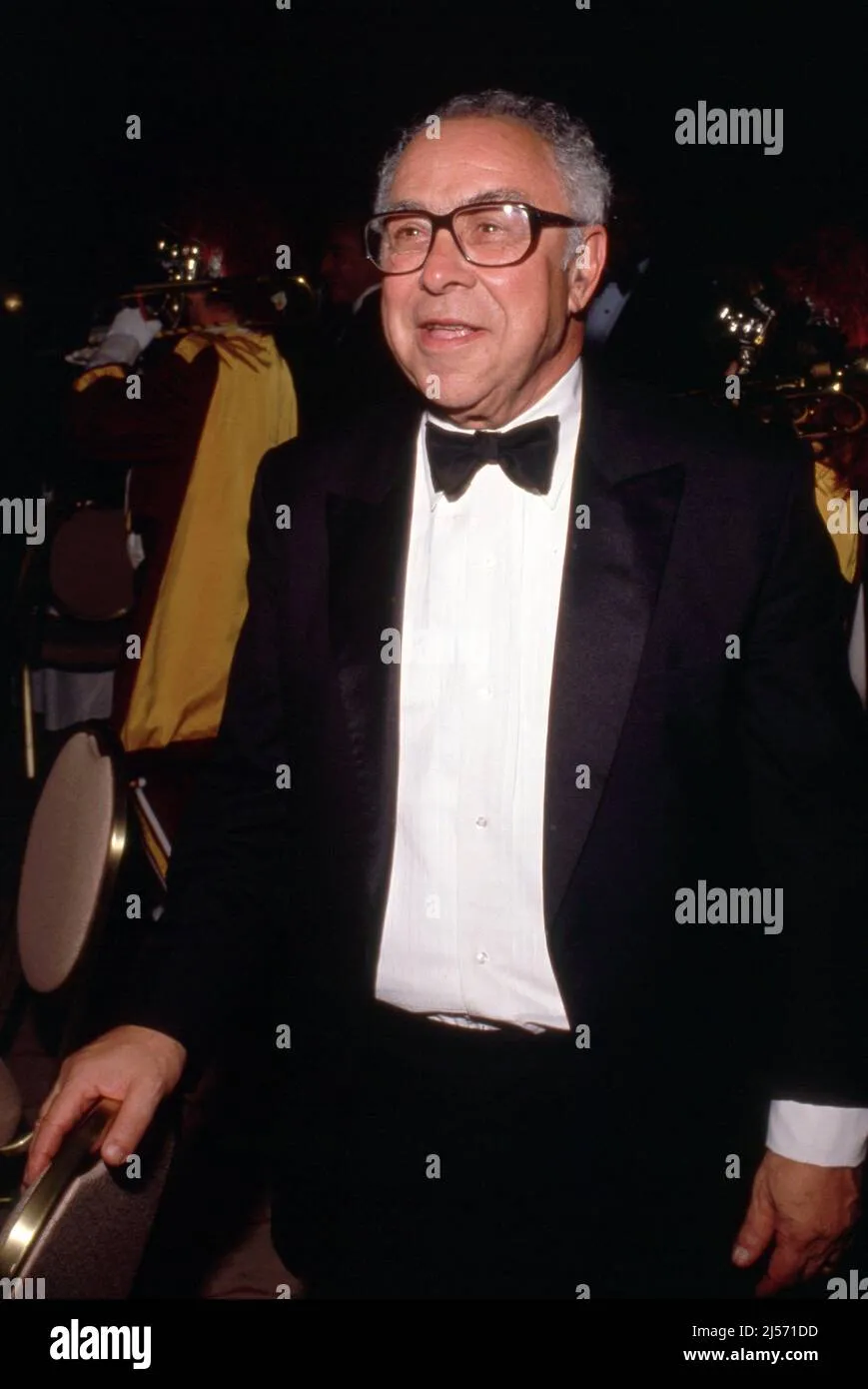 Photo: Art Buchwald, via c8.alamy.com
In 1987, Buchwald checked himself into a psychiatric facility. He emerged and did something that surprised everyone who knew him: he wrote about it. Funny. Honestly. Without the protective layer of irony that had defined his public persona for forty years.
His columns about the experience, and the memoir that followed, were unlike anything he'd written before. The jokes were still there — Buchwald couldn't help himself — but underneath them was something unguarded that his political satire had never quite reached. Readers who had laughed at his columns for decades wrote to tell him that these pieces were the first time they felt like they actually knew him.
Hitting bottom had cost him the armor. It turned out the armor had been the only thing standing between him and his best work.
3. Marsha Norman — The Play She Wrote When She Had Nothing to Lose
Marsha Norman was a thirty-three-year-old playwright with a few regional credits when she wrote 'night, Mother in 1982. The play, which depicts a woman's calm announcement to her mother that she intends to end her life that evening, won the Pulitzer Prize and ran on Broadway to shocked, transfixed audiences.
 Photo: Marsha Norman, via cdn.bookey.app
Norman has spoken in interviews about the period preceding the play as one of profound personal crisis — a collapsing marriage, a sense of professional failure, and a depression that made the work feel not like artistic expression but like survival. She wasn't writing to be celebrated. She was writing to understand something she couldn't otherwise process.
The result was a play with no exits, no relief, and no comfortable distance for the audience. Critics called it unbearable. They also called it extraordinary. The two responses weren't contradictory. The play was unbearable because Norman had written it from a place where she couldn't afford to flinch.
4. Mike Wallace — The Interview Style That Changed After the Interview He Almost Didn't Survive
Mike Wallace spent decades as one of American television's most formidable interviewers, famous for a confrontational style that left subjects nowhere to hide. What fewer people know is that in the mid-1980s, Wallace suffered a severe depressive episode — triggered in part by a lawsuit arising from a 60 Minutes story — that left him, by his own description, barely functional.
His public disclosure of the experience, years later, was characteristic Wallace: blunt, specific, and uncomfortable. But those who worked with him noted a shift in his interviewing style in the years following his treatment. The aggression remained, but it was accompanied by something new — a willingness to let subjects sit in silence, to let emotion land without immediately pressing forward. A patience that hadn't been there before.
He'd learned, perhaps, that the most revealing moments don't come from pressure. They come from stillness. The breakdown had taught him that. He'd applied it to his craft.
5. Spalding Gray — The Monologue That Was the Breakdown
Spalding Gray is the rare case where the creative work and the crisis were not sequential. They were simultaneous.
Gray's autobiographical monologues — delivered seated at a plain table with a glass of water and a notebook — were acts of real-time psychological excavation. His most celebrated work, Swimming to Cambodia (1984), emerged from a period of profound anxiety and dissociation that Gray described not as background noise to the creative process but as the process itself.
He wasn't performing a character experiencing a mental health crisis. He was a person experiencing a mental health crisis who had figured out how to turn the experience into theater in real time. Audiences found it electric and deeply unsettling in equal measure — which was, of course, exactly the point.
Gray's story doesn't have a clean redemptive ending. His struggles deepened over the years, and he died in 2004. But his work stands as perhaps the most literal example of what happens when the wall between interior crisis and public expression simply disappears.
6. Patty Duke — The Autobiography That Rewrote What America Understood About Bipolar Disorder
Patty Duke was twenty when she won the Academy Award for The Miracle Worker. She was in her thirties before she received a diagnosis — bipolar disorder — that explained the decades of chaos that had followed that early triumph. Her 1987 memoir Call Me Anna, written in the aftermath of diagnosis and treatment, was one of the first major celebrity accounts of bipolar disorder in American publishing history.
The book's significance wasn't primarily literary. It was cultural. Duke had the fame to make the subject unavoidable and the honesty to make it real. She described behavior that she'd spent years being ashamed of with a matter-of-factness that was, at the time, genuinely revolutionary. This happened. This is what it looked like. This is what it felt like.
The memoir didn't just help readers understand bipolar disorder. It helped thousands of Americans recognize it in themselves or in someone they loved. Duke received mail for years from people who told her the book had saved their lives. That's what happens when someone stops protecting their image and starts telling the truth.
7. Roxane Gay — The Voice That Came From Refusing to Be Fixed
Roxane Gay occupies a different place in this list — she is the only one still actively working, and her story is still being written. But her trajectory belongs here because it follows the same essential pattern: a period of profound psychological crisis (documented with unflinching honesty in her 2017 memoir Hunger) followed by creative work of a directness and authority that her earlier writing, accomplished as it was, hadn't quite reached.
Gay has been careful — more careful than most — to resist the narrative that suffering made her better. In interviews, she pushes back against the idea that her trauma was formative in any positive sense. What she acknowledges is simpler and more honest: surviving it, and writing about it without softening the edges, stripped away the need to be palatable.
The work that followed was not work written by someone trying to be liked. It was work written by someone who had decided that being understood mattered more. In the attention economy of contemporary media, that distinction is rarer than it should be — and audiences can feel it immediately.
The Thread That Runs Through All of Them
None of these seven people are better off for having suffered. That framing is both false and insulting. What they share is something more specific: each of them, in the aftermath of crisis, found that the usual reasons for self-censorship — fear of judgment, concern for reputation, the instinct to perform rather than reveal — had been temporarily or permanently dismantled.
The work that came out of that dismantling was often the best work of their careers. Not because pain is instructive. But because fear, it turns out, is the enemy of authenticity — and sometimes it takes losing everything to finally stop being afraid.