Too Good to Survive: Seven American Inventions That Were Buried Before They Could Change the World
America loves an inventor. We put them on stamps, name schools after them, teach their stories to children as proof that a good idea and enough stubbornness can change the world. What we talk about less is the graveyard — the ideas that were just as good, just as transformative, and somehow never made it. Suppressed by competitors. Dismissed by experts. Abandoned by inventors who ran out of money or hope before the world caught up with them.
These are seven of the most extraordinary cases. The inventions are real. The resistance was real. And in most cases, the people who fought for these ideas paid a price for it.
1. The Electric Car That Arrived Seventy Years Too Early
Most people believe the electric car is a twenty-first century invention. It is not even close. By the turn of the twentieth century, electric vehicles outsold gasoline-powered cars in the United States. They were quieter, cleaner, and easier to operate — no hand-cranking required, no cloud of exhaust. In 1900, roughly a third of all cars on American roads ran on electricity.
Then the oil industry scaled up. Gasoline became cheap. The internal combustion engine improved, and the electric car — without the infrastructure to support it and without powerful backers — quietly disappeared from the market by the 1920s.
The engineers and entrepreneurs who had built those early electric vehicles didn't vanish quietly. Several spent years trying to revive interest in battery-powered transportation, filing patents, writing to manufacturers, lobbying anyone who would listen. They were, almost universally, dismissed as eccentric or irrelevant. The infrastructure for gasoline was already in place. The money was already pointed in one direction.
It took the better part of a century — and a planetary climate crisis — for the world to circle back to what those early engineers already knew.
2. Ignaz Semmelweis and the Hands That Could Have Saved Millions
This one is not strictly American, but its American chapter is particularly grim. By the mid-nineteenth century, a Hungarian physician named Ignaz Semmelweis had demonstrated conclusively that doctors washing their hands before delivering babies dramatically reduced the rate of fatal infections in maternity wards. In some hospitals, his protocol cut mortality rates from over ten percent to under two.
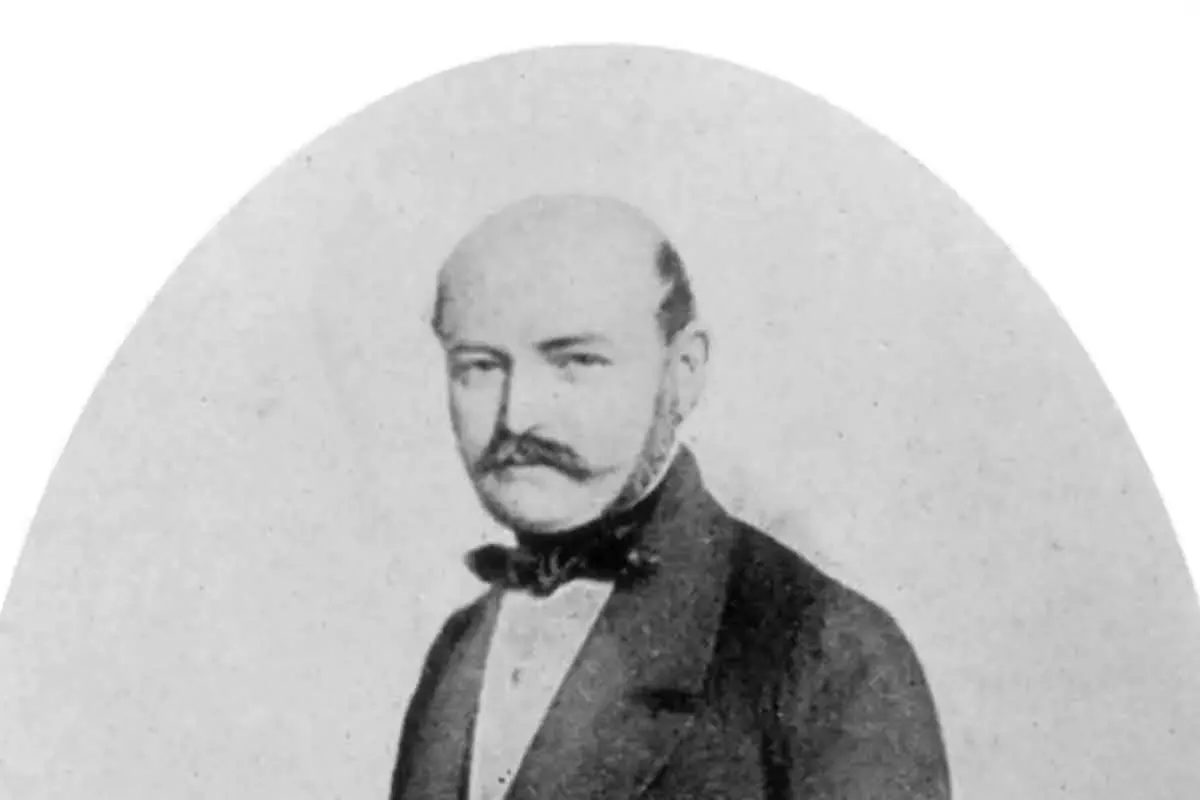 Photo: Ignaz Semmelweis, via facts.net
The American medical establishment largely ignored him. The germ theory of disease had not yet been formally established, and the idea that doctors themselves were killing patients was considered insulting rather than instructive. Semmelweis was ridiculed, professionally marginalized, and eventually committed to a mental institution, where he died in 1865 — likely from the same kind of infection he had spent his career trying to prevent.
American hospitals did not widely adopt mandatory handwashing protocols until the late nineteenth century, after Louis Pasteur and Joseph Lister had independently confirmed what Semmelweis already knew. Historians have estimated that the delay cost hundreds of thousands of lives in the United States alone.
He was right. He was right the entire time. That is the part that stays with you.
3. The Solar Panel Patent That Sat Untouched for Decades
In 1954, Bell Labs announced a working silicon solar cell — a device capable of converting sunlight directly into electricity. The initial public reaction ranged from fascinated to enthusiastic. The New York Times called it "the beginning of a new era."
Then the oil and utility industries got involved. The economics of the moment made solar power comically uncompetitive with cheap fossil fuels, and there was little financial incentive for the companies that dominated American energy to invest in a technology that threatened their existing infrastructure. Research funding dried up. Government interest faded.
For most of the next three decades, solar technology advanced at a crawl — not because the science was intractable, but because the money wasn't there. Individual researchers at universities and small companies kept the work alive, often on shoestring budgets, filing patents that sat largely uncited in government archives.
The engineers who dedicated careers to solar power during this period were not celebrated. They were mostly ignored. The "new era" that The Times had predicted in 1954 didn't meaningfully begin until the twenty-first century — and it arrived largely because a new generation of engineers picked up work that had been quietly accumulating in those dusty patent files for fifty years.
4. The Seat Belt That Detroit Refused to Sell
By the early 1950s, the evidence that seat belts saved lives in automobile crashes was not a matter of scientific debate. Researchers had been publishing data on it for years. Cornell University's Automotive Crash Injury Research program had produced clear, compelling findings. A lap belt, the studies showed, could reduce fatality risk in a serious crash by more than sixty percent.
The American auto industry's response was, for years, essentially: no thanks. Internal studies at major manufacturers acknowledged the data. The objection wasn't scientific — it was commercial. Executives worried that marketing safety would imply their cars were dangerous, which would hurt sales. One Ford executive famously argued that "safety doesn't sell."
It took decades of advocacy, congressional pressure, and the relentless public campaigning of figures like Ralph Nader before federal law required seat belts as standard equipment in 1968. The researchers who had spent the previous twenty years trying to get the industry to act voluntarily watched the legislative victory with a mixture of relief and exhaustion.
The delay, by multiple estimates, cost tens of thousands of American lives.
5. Chester Carlson and the Copying Machine Nobody Wanted
In 1938, a patent attorney named Chester Carlson invented a dry photocopying process in the kitchen of his apartment in Astoria, Queens. He called it electrophotography. You know it today as xerography — the technology inside every photocopier and laser printer on earth.
For the next seven years, Carlson took his invention to more than twenty companies, including IBM, General Electric, and RCA. Every single one turned him down. The feedback was consistent: it was a solution in search of a problem. Carbon paper worked fine. Nobody needed this.
It was a small nonprofit research organization, the Battelle Memorial Institute, that finally saw what Carlson had. They helped him refine the technology and eventually connected him with a small photographic paper company in Rochester, New York — the Haloid Company, which later renamed itself Xerox.
The Xerox 914, launched in 1959, became one of the most commercially successful products in American business history. Carlson, who had spent two decades being told his invention was unnecessary, died in 1968 as one of the wealthiest inventors in the country. He gave most of it away.
6. The Antibiotic That Arrived Late
Alexander Fleming's discovery of penicillin in 1928 is famous. Less famous is what happened next: almost nothing, for over a decade. Fleming published his findings, noted that penicillin appeared to kill a remarkable range of bacteria, and then — largely because he lacked the chemistry background to stabilize and produce it in useful quantities — moved on to other work.
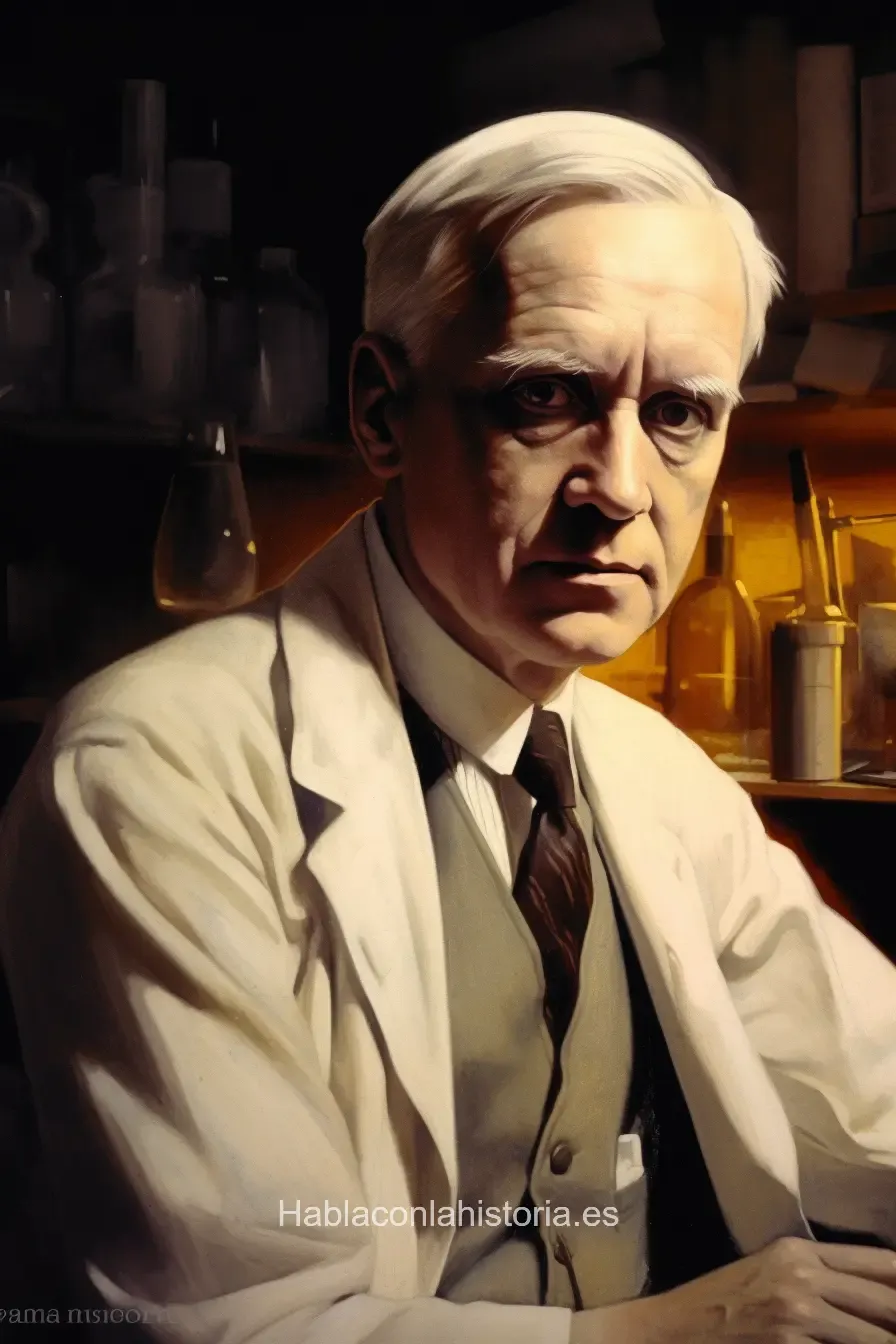 Photo: Alexander Fleming, via hablaconlahistoria.es
The medical establishment showed little urgency. The pharmaceutical industry showed less. It took the specific pressure of World War II — and the prospect of American and Allied soldiers dying from infected wounds — to force the mass production of penicillin into being. American pharmaceutical companies, working under government contract, solved the production problem between 1942 and 1944.
The antibiotic era, which has saved an estimated two hundred million lives worldwide, was delayed by roughly fifteen years not by scientific obstacles but by institutional indifference. The people who finally pushed it across the finish line weren't the ones who discovered it. They were the ones who refused to accept that a discovery sitting on a shelf was the same thing as a discovery that didn't exist.
7. The FM Radio Signal That Was Almost Silenced
Edwin Howard Armstrong invented FM radio in the early 1930s. It was, by any technical measure, vastly superior to the AM radio that dominated American airwaves — clearer, richer, and almost entirely free of static. Armstrong demonstrated it publicly in 1935 to a room full of engineers who were stunned by the sound quality.
RCA, which controlled most of American radio through its subsidiary NBC and had enormous financial stakes in AM broadcasting, spent the next decade doing everything in its power to stop FM from reaching consumers. They lobbied the FCC to reassign FM to a different frequency band — a move that rendered all existing FM receivers obsolete overnight. They delayed licensing. They buried Armstrong in patent litigation that drained his finances and consumed his attention for years.
Armstrong, who had already invented the regenerative circuit and the superheterodyne receiver and was considered one of the greatest electrical engineers in American history, fought RCA in court for years. He ran out of money. In 1954, he took his own life.
FM radio became the dominant American broadcasting format within two decades of his death. The technology he invented is still in use today, essentially unchanged. His wife, Marion, eventually won the patent suits he had been fighting when he died.
He was right. He just didn't live to hear anyone say so.
The Pattern Behind the Pattern
Look at these seven stories long enough and a shape emerges. In almost every case, the obstacle wasn't the science. The science worked. The obstacle was money, or institutional inertia, or the specific human instinct to protect what already exists from what might replace it.
The inventors who survived this pattern — Carlson, the solar researchers, the early seat belt advocates — were the ones who found allies, outlasted the opposition, or got lucky enough to have the world change around them. The ones who didn't — Semmelweis, Armstrong — ran out of runway before the tide turned.
America celebrates its inventors. What it has sometimes been slower to do is protect them from itself.