Canvas Behind Bars: How Ten Years in Prison Unlocked an Artist America Never Saw Coming
The Discovery
The art world first noticed Marcus Williams in 2003, when a small gallery in Oakland displayed a collection unlike anything curators had seen before. The paintings were raw, powerful, and strangely luminous—portraits that seemed to glow from within, landscapes that captured both despair and hope in the same brushstroke.
What shocked the art establishment wasn't just the quality of the work. It was the artist's biography: Williams had created his entire body of work in a maximum-security prison cell, using materials smuggled from the kitchen, medical bay, and maintenance shop. He'd never taken an art class, never studied technique, never even held a real paintbrush until he was thirty-two years old.
"Marcus painted like someone who had discovered fire," remembered Sarah Chen, the gallery owner who first exhibited his work. "There was this urgency, this desperate beauty that you can't teach. You either feel it or you don't."
Williams felt it. And ten years behind bars had given him nothing but time to figure out how to capture it.
The Education of Desperation
Williams arrived at San Quentin State Prison in 1993 carrying a fourth-grade reading level and a twenty-five-year sentence for armed robbery. At twenty-two, he was angry, illiterate, and convinced his life was over before it had really begun.
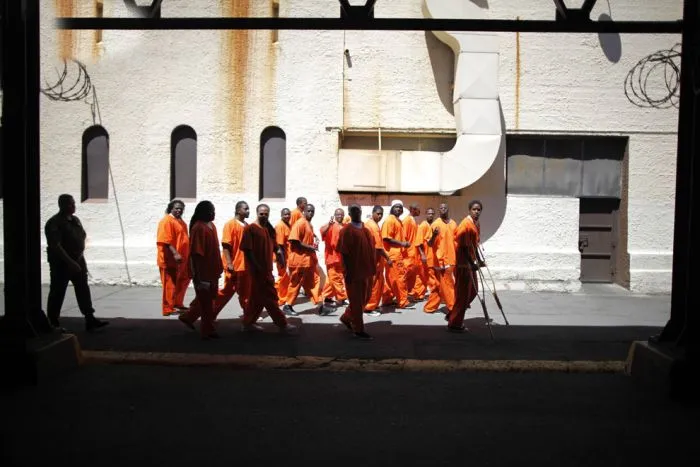 Photo: San Quentin State Prison, via piximus.net
"I spent the first year just being furious," Williams later recalled. "Furious at the system, at my choices, at the concrete walls that stretched up forever. I thought anger was all I had left."
But San Quentin's library became Williams' accidental salvation. Desperate for any escape from his eight-by-ten cell, he began checking out picture books—anything with images instead of words he couldn't read. Art books became his favorites: Van Gogh's swirling skies, Basquiat's urban poetry, Jacob Lawrence's migration series.
"I'd stare at those paintings for hours," Williams remembered. "I didn't understand technique or art history. I just knew some of these artists had been angry too, and somehow they'd turned that anger into something beautiful."
Materials and Miracles
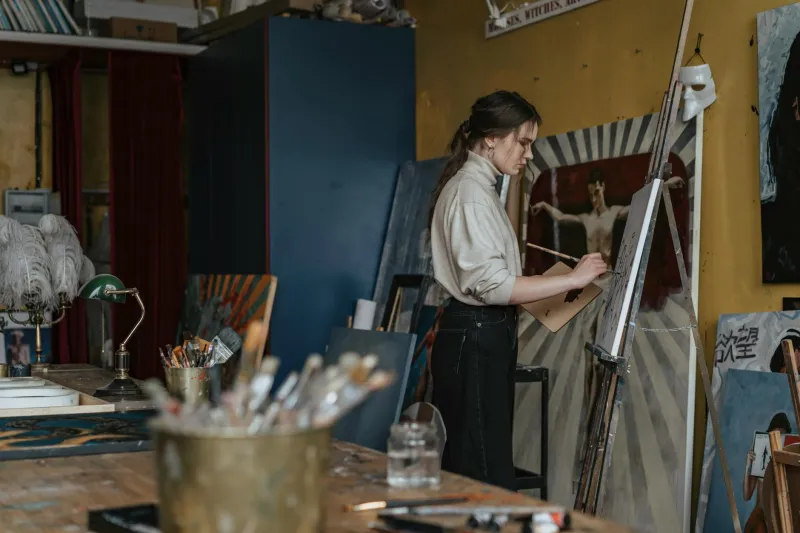
Prison doesn't provide art supplies. So Williams learned to see potential everywhere: coffee grounds became brown paint, crushed brick mixed with toothpaste created red, and berry juice stolen from the cafeteria produced purple. He painted on cardboard torn from cereal boxes, commissary bags, and eventually bedsheets when he could save enough money to buy extras.
His first "brushes" were strips of cloth tied to pencil stubs. Later, he convinced a janitor to save worn mop strings, which Williams cleaned obsessively and shaped into different sizes. The medical bay provided cotton swabs for detail work. Everything had to be hidden, improvised, and created from materials that officially didn't exist.
"Prison teaches you to see resources everywhere," Williams explained. "A sugar packet becomes white paint. A magazine page becomes a palette. When you have nothing, everything becomes something."
The physical constraints forced Williams to develop an economy of expression that trained artists spend years trying to achieve. With limited materials and constant risk of discovery, every mark had to matter. Every color had to serve multiple purposes. Every painting became an act of rebellion against a system designed to strip away creativity.
The Breakthrough
Williams' artistic awakening came during his fourth year of incarceration, triggered by a letter from his eight-year-old daughter. She'd drawn him a picture—stick figures holding hands under a rainbow—and asked when he was coming home.
"I looked at her drawing and realized she was doing something I'd never done," Williams said. "She was creating hope on paper. Making something exist that wasn't there before."
That night, using coffee grounds and toothpaste on a piece of cardboard, Williams painted his first serious work: a portrait of his daughter based on a photograph he'd memorized. The painting was crude, technically flawed, but possessed an emotional honesty that would become his signature.
"Marcus painted like his life depended on it," remembered his cellmate, David Torres. "Every night after lights out, I'd hear him working by the light coming through the door crack. Mixing colors, moving his hand across whatever surface he'd found that day. It became like a meditation for both of us."
The Underground Gallery
Word of Williams' talent spread through San Quentin's informal networks. Guards began commissioning portraits of their families. Inmates traded cigarettes for small paintings. Williams' cell became an underground gallery where men serving life sentences could see beauty that existed nowhere else in their concrete world.
But the paintings served a deeper purpose than decoration. In a place designed to break spirits, Williams' art proved that creativity couldn't be imprisoned. His portraits captured the humanity that the system tried to erase. His landscapes showed skies that existed beyond razor wire.
"Marcus painted us back to life," explained Robert Martinez, who served fifteen years alongside Williams. "When you're surrounded by grey walls and grey uniforms and grey food, seeing color—real color that someone made with their hands—reminds you that you're still human."
Williams completed over 200 paintings during his decade in prison. Each one was created in secret, hidden from searches, and shared only with trusted friends. The collection grew into a visual diary of incarceration—not just the darkness, but the unexpected moments of connection, humor, and grace that survived even there.
The World Beyond
Williams' early release in 2003 (his sentence was reduced for good behavior and educational achievement) should have been pure celebration. Instead, he felt terrified. Prison had become his art studio, his community, his known world. Freedom meant starting over with nothing but a garbage bag of belongings and a head full of images he'd painted in secret.
"I'd been dreaming of getting out for ten years," Williams said. "But when it actually happened, I realized I had no idea how to be an artist in the real world. I'd only learned how to create under the worst possible conditions."
A social worker connected Williams with Sarah Chen's gallery, where he nervously displayed twelve paintings—all he'd managed to smuggle out during his release. Chen recognized immediately that she was seeing something unprecedented: prison art that transcended its circumstances to become simply great art.
"Marcus didn't paint like a victim or an outsider," Chen reflected. "He painted like someone who'd found profound truth in an impossible place. The work had this luminous quality, like light breaking through darkness."
Recognition and Reflection
The Oakland exhibition sold out in three days. Art collectors, critics, and museums began taking notice of the former inmate whose paintings captured something authentic about the American experience of incarceration, redemption, and hope.
Williams' work now hangs in permanent collections at the Oakland Museum, the Smithsonian's National Museum of African American History and Culture, and private collections across the country. He's been featured in Art in America, profiled by NPR, and invited to speak at universities about art, justice, and the transformative power of creativity.
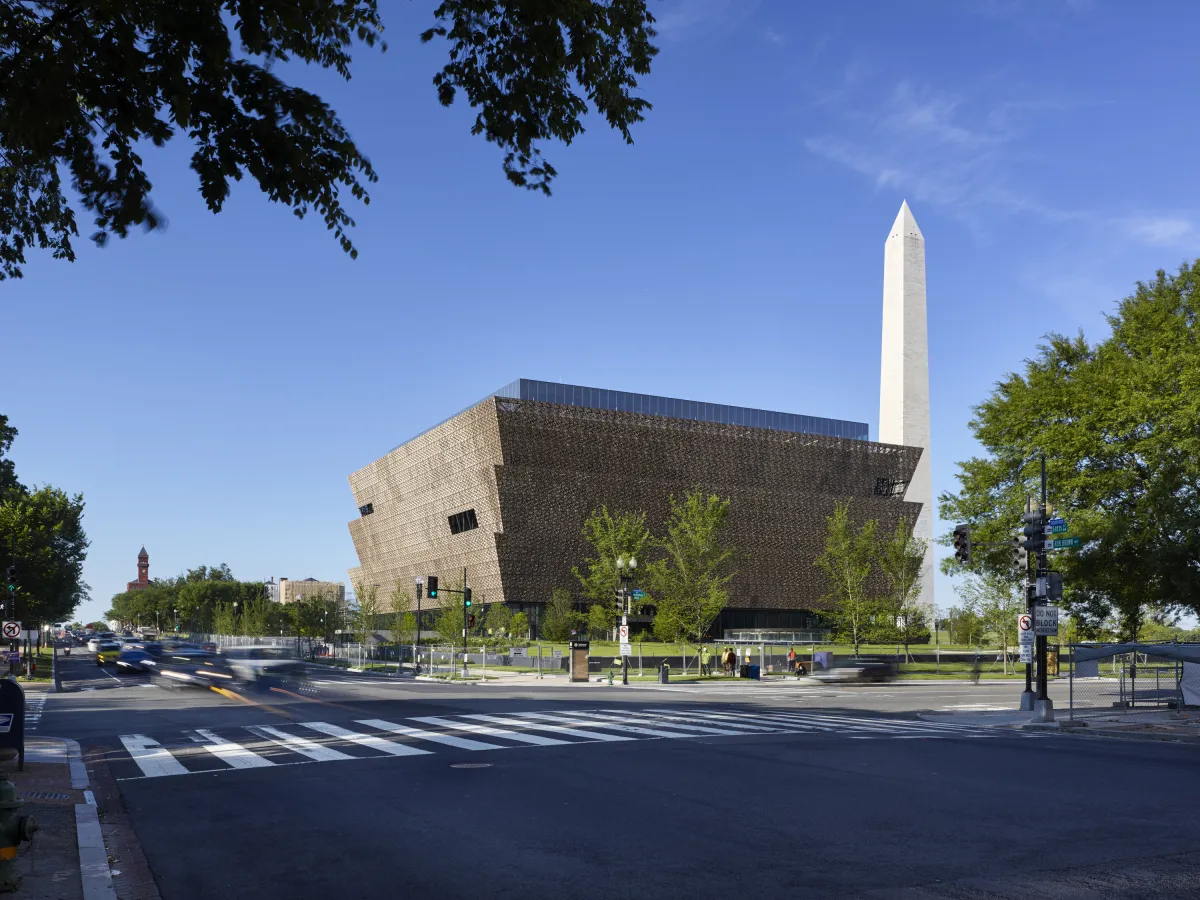 Photo: Smithsonian's National Museum of African American History and Culture, via www.mcmorrowreports.com
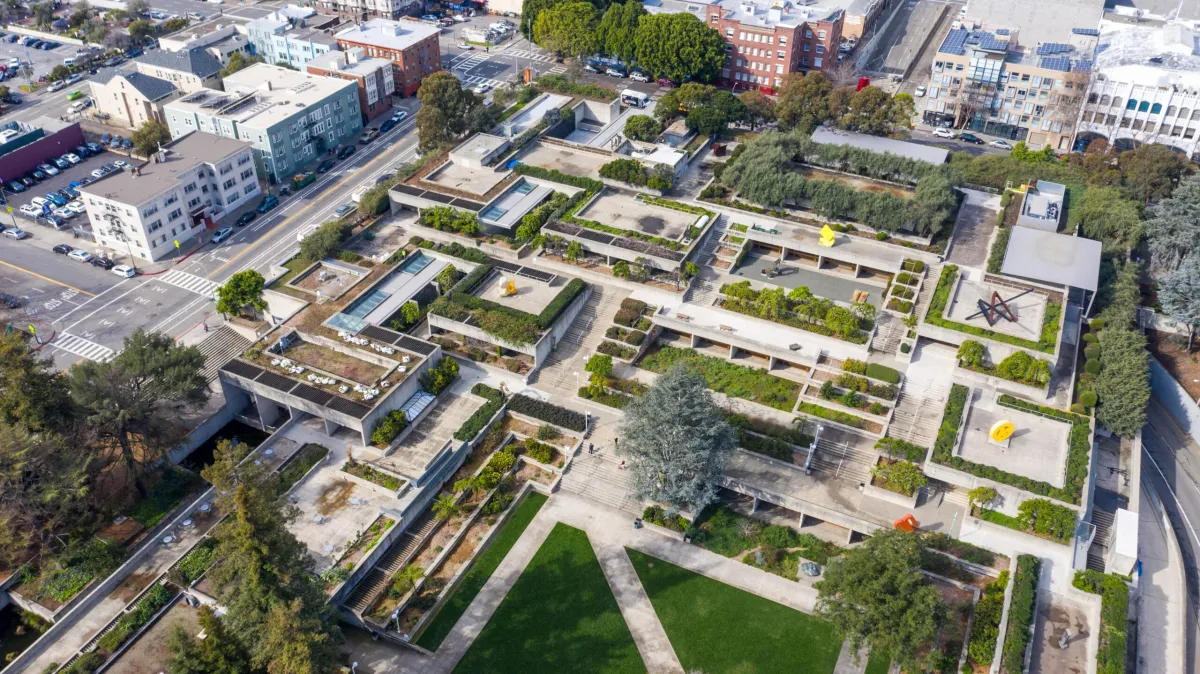 Photo: Oakland Museum, via apeirodesign.com
But Williams remains most proud of the community outreach programs he's developed, teaching art to at-risk youth and formerly incarcerated individuals. His studio in West Oakland has become a gathering place for people who've discovered, as he did, that creativity can survive anywhere—even thrive under the most limiting circumstances.
"Prison tried to make me smaller," Williams reflects, standing before a new painting—a luminous landscape that seems to glow from within. "But art made me larger than my circumstances. It taught me that walls can contain your body, but they can't contain your imagination."
The Lesson of Constraint
Marcus Williams' story challenges comfortable assumptions about artistic development. He received no formal training, had no access to proper materials, and worked under conditions designed to crush creativity. Yet those very constraints forced him to discover resources within himself that abundance might never have revealed.
"People ask what my secret is," Williams says. "I tell them: when you have absolutely nothing left to lose, you find out what you're really made of. For me, it turned out I was made of color, hope, and the absolute refusal to let concrete walls define what's possible."
His paintings stand as proof that extraordinary art can emerge from the most ordinary materials, that creativity finds a way regardless of circumstances, and that sometimes the darkest places produce the most luminous work. Williams didn't just serve his time—he transformed it into something beautiful that continues to illuminate lives far beyond the walls where it began.